Millions of people around the world live and work in high-rise buildings that were constructed decades before current fire safety standards existed. These buildings — many of them architectural landmarks and beloved fixtures of their city skylines — were designed according to codes that have since been dramatically revised in response to new research, technological advances, and lessons learned from tragic fires. The challenge of bringing these older structures up to modern fire safety standards, known as retrofitting, is one of the most important and complex undertakings in the building safety field. It requires balancing safety imperatives with structural limitations, economic realities, and often, the preservation of historical and architectural character.
The gap between the fire safety features of an older building and current code requirements can be enormous. A building constructed in the 1960s may lack sprinkler systems entirely, have stairwells that do not meet current width or pressurization standards, feature electrical systems that present significant fire risks, and use construction materials that would not be permitted today. Addressing these deficiencies requires a systematic approach that prioritizes the most critical safety upgrades while working within the physical and financial constraints of the existing structure. For the residents of these buildings, understanding what retrofitting can and cannot accomplish is essential for making informed decisions about their building’s fire safety and their personal preparedness.
Sprinkler System Retrofitting: The Most Impactful Upgrade
The installation of automatic sprinkler systems is widely regarded as the single most effective fire safety retrofit that can be performed on an older building. Sprinklers dramatically reduce the risk of fire-related death and property damage, with studies showing that sprinklers control or extinguish fires in the vast majority of activations. For buildings that were constructed without sprinklers — which includes most high-rise buildings built before the 1980s in many jurisdictions — a sprinkler retrofit transforms the building’s fire safety profile more profoundly than any other single improvement.
However, sprinkler retrofitting in an existing building is a complex and costly undertaking. The installation requires running water supply pipes through every floor of the building, which means opening walls and ceilings, routing pipes through occupied spaces, and connecting to a water supply system that may need significant upgrading to deliver the required pressure and volume. In older buildings with concrete construction, this work can be particularly challenging, as cutting through structural elements requires careful engineering analysis to ensure the building’s integrity is maintained. Despite these challenges, many jurisdictions now require sprinkler retrofitting in high-rise buildings above a certain age or when buildings undergo major renovation, recognizing that the life-safety benefits justify the investment.
Fire Alarm and Detection System Upgrades
Older buildings often have fire alarm systems that are severely outdated by modern standards. Early alarm systems may have used technology that is no longer supported by manufacturers, making parts replacement impossible. More critically, older systems may not provide the coverage, sensitivity, or communication capabilities that current codes require. A modern fire alarm system includes addressable smoke and heat detectors in every occupied space, pull stations at every exit, audible and visual notification devices throughout the building, and integration with the building’s smart building management systems.
Upgrading the fire alarm system in an older building is generally less physically disruptive than a sprinkler retrofit, as modern detection and notification devices are compact and can often be installed with minimal structural modification. However, the wiring infrastructure required to connect all components can be extensive, and in buildings with limited space in walls and ceilings for new cable runs, wireless fire alarm technologies are increasingly being deployed as a practical alternative. These wireless systems use radio frequency communication between devices, eliminating the need for new wiring while providing the same level of detection and notification capability as hardwired systems.
Stairwell and Evacuation Route Improvements
Stairwells in older high-rise buildings frequently fall short of current code requirements in several critical ways. They may be narrower than current standards require, limiting the flow of evacuees and increasing the time needed for full building evacuation. They may lack pressurization systems that keep smoke from entering the stairwell during a fire, meaning that the primary evacuation route can become the primary smoke exposure pathway. And they may not have emergency lighting or signage that meets current visibility and durability standards, leaving evacuees to navigate in darkness if power fails.
Retrofitting stairwells for improved evacuation capability presents unique challenges because the physical dimensions of existing stairwells generally cannot be changed without major structural modification. Instead, retrofit strategies focus on the modifications that are feasible: installing stairwell pressurization fans to maintain smoke-free conditions, upgrading emergency lighting to LED systems with battery backup, adding photoluminescent markings that glow in the dark without requiring power, and improving handrail systems for safer descent. These modifications can significantly improve evacuation conditions even when the stairwell’s basic dimensions remain unchanged.
Facade and Cladding Remediation
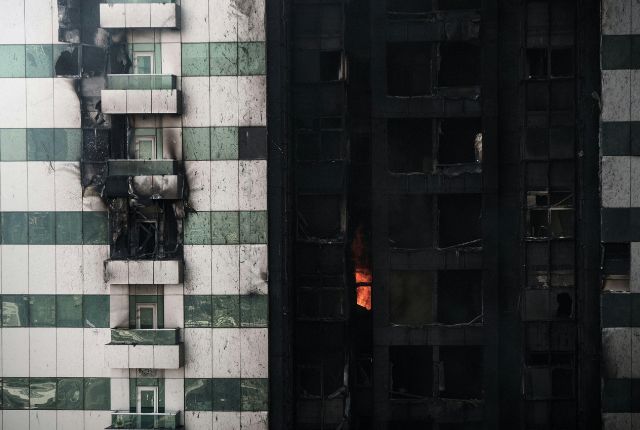
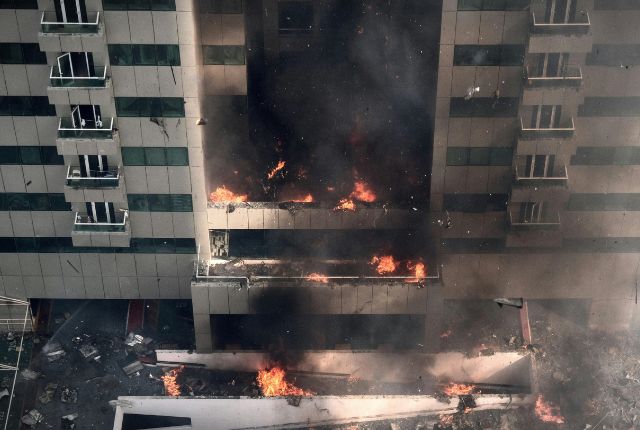
The issue of combustible exterior cladding on older buildings has received intense attention since the Grenfell Tower tragedy. Many buildings constructed or renovated between the 1990s and 2010s used aluminum composite panels with polyethylene cores or other combustible insulation materials on their facades. These materials, while providing effective thermal insulation and attractive appearance, can contribute to rapid external fire spread that bypasses the building’s internal fire barriers. Remediation programs to remove and replace combustible cladding are underway in many countries, though the scale and cost of this work present significant challenges.
Cladding remediation typically involves removing the existing facade system, inspecting the underlying structure for fire damage or deterioration, and installing new non-combustible cladding that meets current fire performance standards. This work is expensive — often costing tens of thousands of dollars per apartment — and disruptive, as scaffolding and construction activity surround the building for months or years. For residents living in buildings with known cladding issues that have not yet been remediated, personal fire safety preparedness takes on added urgency. Having a clear evacuation plan, functioning smoke and CO detectors in every room, and personal evacuation equipment provides a safety margin while the building-level remediation progresses.
The Economics and Politics of Fire Safety Retrofitting
The cost of comprehensive fire safety retrofitting can be substantial — often millions of dollars for a single large building. This cost raises difficult questions about who should pay and how quickly the work should be completed. In some jurisdictions, building owners bear the full cost, which may be passed on to tenants through increased rents or maintenance charges. In others, government programs provide subsidies or loans to support the most critical safety upgrades. The debate over retrofit funding reflects a broader tension between the moral imperative of protecting lives and the economic reality of limited resources.
For residents of older buildings where comprehensive retrofitting has not been completed, personal preparedness becomes the most reliable safety net. While advocating for building-level improvements through tenant associations and regulatory channels, individual residents should ensure they have taken every possible step to protect themselves and their families. This includes maintaining personal smoke detectors, developing and practicing a family evacuation plan, knowing alternative escape routes, and investing in personal evacuation equipment that provides an independent means of escape when the building’s systems cannot be fully relied upon.
Looking Forward: Mandatory Retrofit Programs
The trend in fire safety regulation is clearly toward more aggressive mandatory retrofit requirements. Cities including New York, London, Melbourne, and Dubai have all implemented or expanded retrofit mandates in recent years, recognizing that the fire safety gap in older buildings represents an unacceptable risk to residents. These programs vary in scope and timeline, but they share a common goal: ensuring that the buildings we live and work in today provide a level of fire safety that reflects current knowledge, not the standards of decades past. For high-rise residents worldwide, these programs represent a long-term improvement in safety, but the timeline of implementation means that personal preparedness remains the most immediate and reliable protection available.

Attachable Baby Harness
Lightweight safety harness for fast and secure infant evacuation in high-rise emergencies.

Parent Package
Complete emergency evacuation kit for the parent and dependant. Fast, safe descent from high-rise buildings.

Parent Edition
Complete high-rise evacuation solution for a parent, maximum safety and fast deployment.

Single Self-Rescue Kit
Complete emergency evacuation kit for high-rise fast, safe descent during critical emergencies.
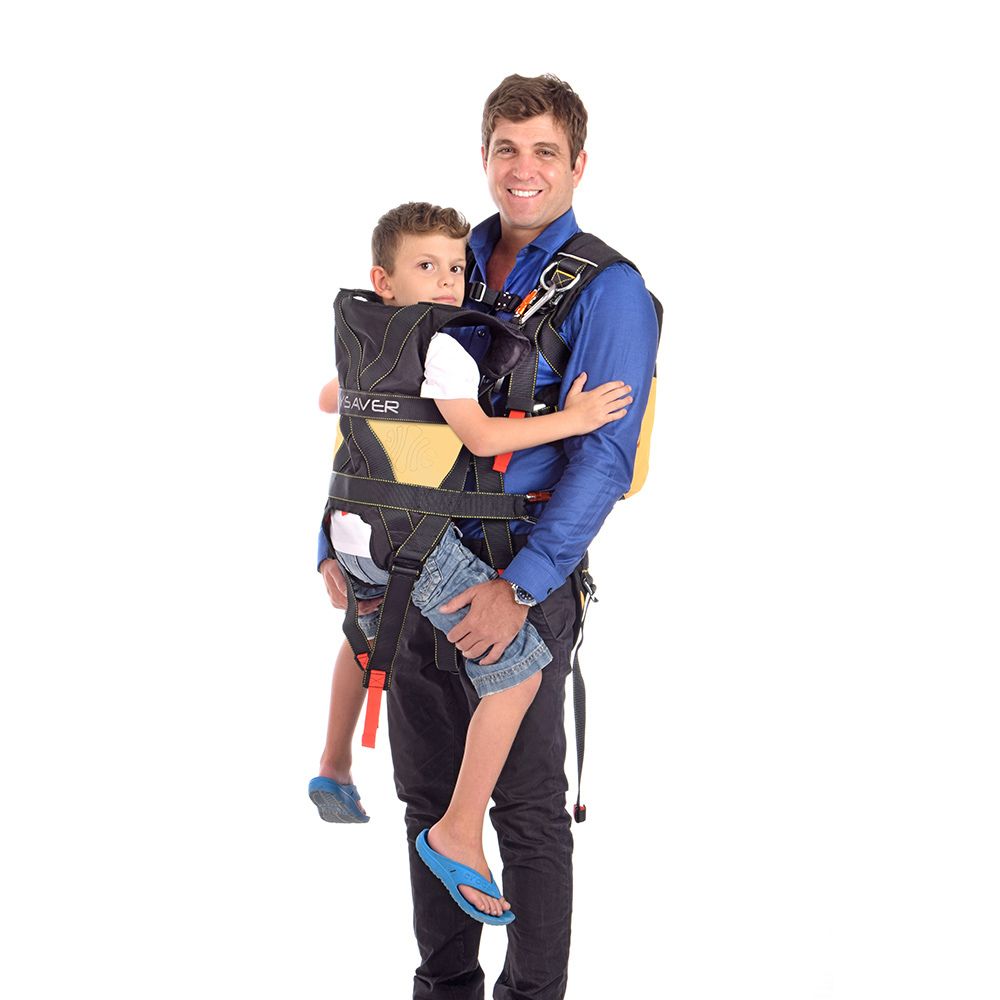
Attachable Child Harness
Lightweight child safety harness designed for secure, controlled evacuation from high-rise buildings.
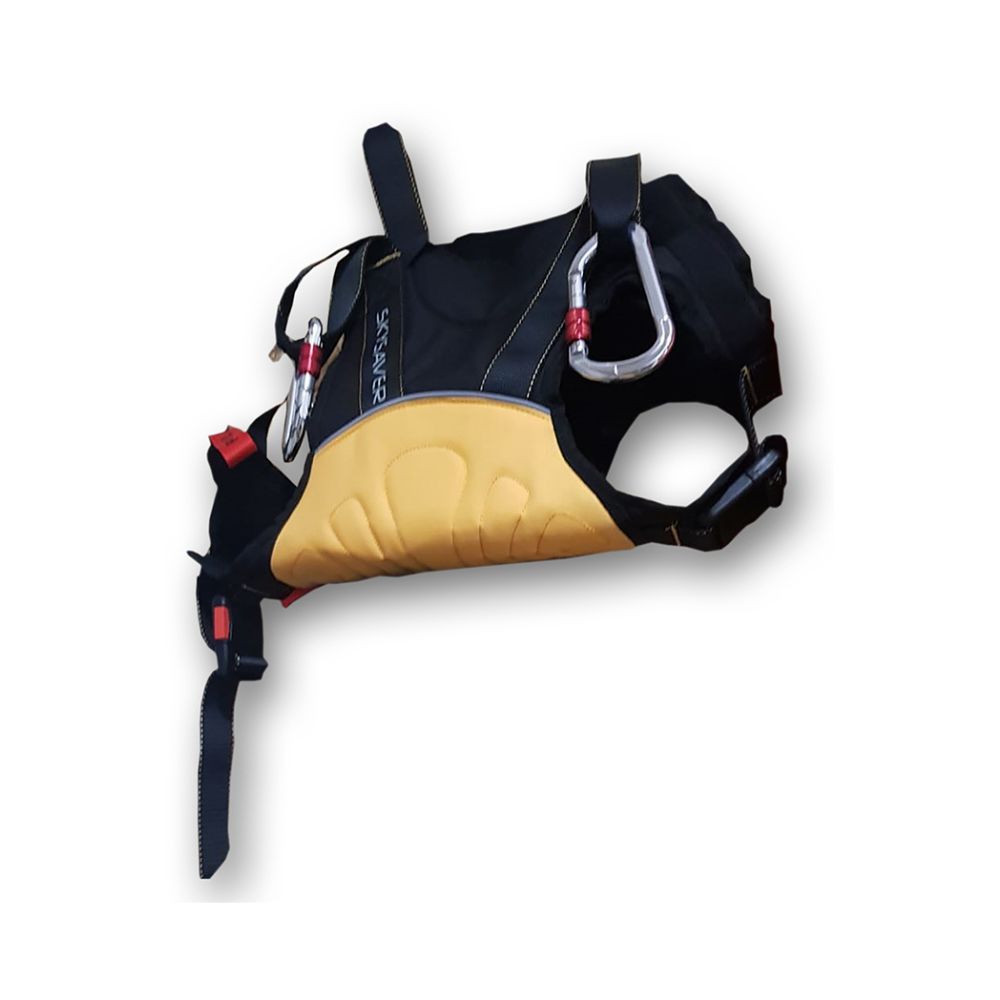
Attachable Pet Harnesses
Secure, lightweight safety harness designed for fast and controlled pet evacuation from high-rise buildings.

single Self-Rescue Harnesseses
Professional external safety harness for secure personal evacuation from high-rise buildings.
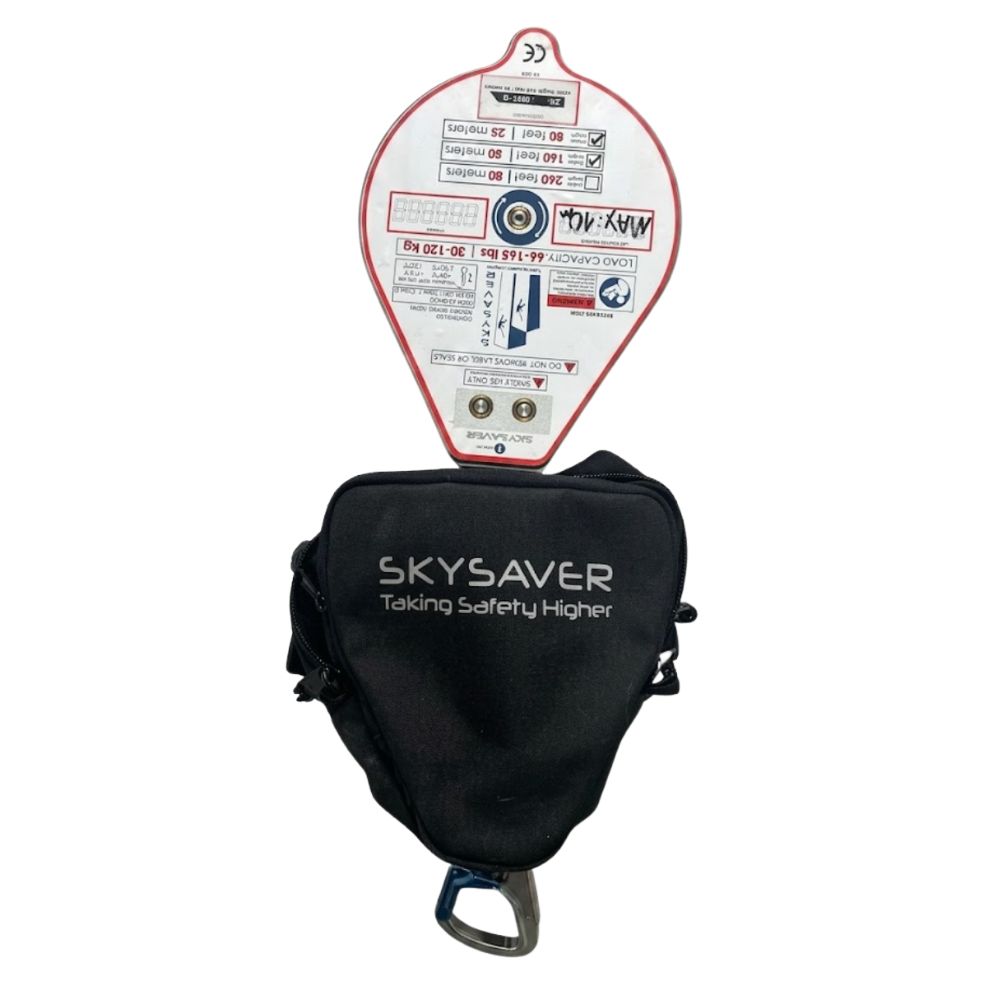
Controlled Descent Device (CDD)
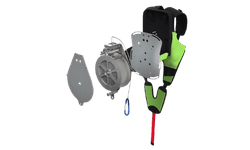
External CDD unit for safe, controlled descent during high-rise emergency evacuation.