The term “Personal Emergency Response System” — commonly abbreviated as PERS — has long been associated with the medical alert devices worn by elderly individuals living alone. The classic image of a pendant with a button that calls for help when pressed has become a cultural shorthand for vulnerability and aging. But the concept of PERS is undergoing a dramatic evolution, and its relevance now extends far beyond its traditional user base. For residents of high-rise buildings, where the distance between an apartment and the street creates unique emergency response challenges, personal emergency response systems are emerging as an essential component of comprehensive safety planning.
The modern PERS has evolved from a simple panic button into a sophisticated platform that integrates communication, location tracking, health monitoring, and environmental sensing into wearable devices that are discreet, reliable, and increasingly intelligent. These systems connect the wearer to emergency monitoring centers, building management systems, and even directly to emergency services, providing a lifeline that works when phone lines are down, when smoke makes it impossible to see a phone screen, or when a medical emergency leaves someone unable to dial for help. In the vertical environment of a high-rise building, where traditional emergency response can be delayed by elevator wait times, floor-by-floor search operations, and the sheer complexity of reaching an upper floor, PERS technology bridges a critical gap between when an emergency begins and when help arrives.
How Modern Personal Emergency Response Systems Work
Today’s personal emergency response systems operate on multiple technology layers to ensure reliability in diverse emergency scenarios. At the most basic level, the system includes a wearable device — a pendant, wristband, or smart watch — with a button that, when pressed, establishes a voice connection with a professional monitoring center. Trained operators at the center can assess the situation, contact emergency services, notify designated family members, and in buildings with integrated systems, alert building management and security personnel.
Advanced PERS devices go significantly beyond the basic call button. Automatic fall detection uses accelerometers and sophisticated algorithms to identify fall events and trigger alerts even when the wearer is unable to press the button — critical in fire emergencies where smoke inhalation or burns may render a person unconscious. GPS and indoor positioning systems provide location data that tells emergency responders not just which building the person is in, but which floor and approximate area of the floor they occupy. Some systems incorporate environmental sensors that can detect smoke, elevated temperatures, or carbon monoxide levels, automatically triggering alerts when hazardous conditions are detected around the wearer, even before the wearer is aware of the danger.
Why High-Rise Living Creates Unique Emergency Response Challenges
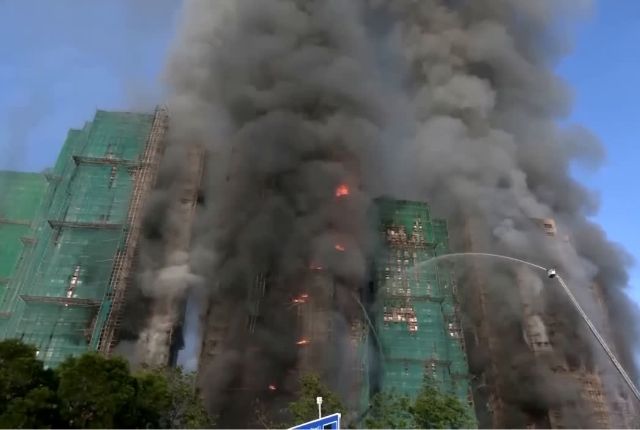
The case for PERS in high-rise buildings is rooted in the fundamental physics and logistics of vertical living. When an emergency occurs on the 25th floor, the response timeline is inherently longer than for a ground-level incident. Firefighters must access the building, transport equipment to the fire floor via stairs — since elevators are typically out of service during fires — and then navigate corridors to reach the specific unit in distress. This process can take 15 to 20 minutes or more in a large building, a timeframe during which conditions inside a fire-affected apartment can deteriorate from dangerous to fatal.
PERS technology compresses this timeline in several ways. Immediate notification means that emergency services are dispatched at the first moment of crisis, not after a delay while the resident searches for a phone or tries to remember emergency numbers in a state of panic. Precise location data eliminates the need for floor-by-floor searches, directing responders to the exact location of the person in distress. Continuous communication between the wearer and the monitoring center provides real-time intelligence about conditions inside the building — information that is invaluable for making informed decisions about approach and rescue strategies.
PERS for Fire Emergencies: Beyond the Medical Alert
While PERS originated as a medical emergency device, its applications in fire emergencies are increasingly recognized and developed. During a high-rise fire, a PERS device serves as a persistent communication link when phone service may be disrupted, when hands are needed for crawling through smoke, or when the disorientation of a fire emergency makes operating a smartphone impossible. The single-button activation model — press once and you are connected to professional help — is designed for exactly these high-stress, low-capacity moments.
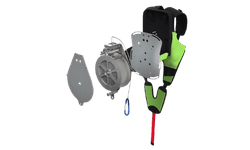
For residents who are trapped by fire and unable to evacuate through conventional routes, PERS devices provide something equally important: a way to communicate their location and status to rescuers. In previous high-rise fire tragedies, some victims were unable to reach firefighters despite being in survivable locations simply because no one knew they were there. A PERS device that continuously transmits location data eliminates this information gap, ensuring that every trapped resident is accounted for in the rescue operation. When combined with personal evacuation equipment like the SkySaver rescue backpack, PERS creates a comprehensive safety net: the monitoring system ensures help is coming, while the evacuation device provides a way out if help cannot arrive in time.
Who Benefits Most from PERS in High-Rise Buildings?
While every high-rise resident can benefit from PERS technology, certain populations have an especially compelling case for adoption. Elderly residents, who represent a growing proportion of high-rise occupants in many cities, face elevated risks during fire evacuations due to mobility limitations, cognitive challenges, and the physical demands of descending many flights of stairs. For these residents, a PERS device is not a luxury — it is a necessity that provides continuous protection and a guaranteed connection to help.
Residents who live alone represent another key demographic for PERS adoption. In a high-rise fire, a person living alone who becomes incapacitated by smoke has no one to call for help or alert emergency services. A PERS device with automatic fall detection and environmental monitoring provides an automated safety net that performs the alerting function that a household member would normally fulfill. Families with young children also benefit from PERS systems that can be configured to alert parents if environmental conditions in the home change while they are in another room or momentarily away from their unit.
Integrating PERS with Building-Wide Safety Systems
The most powerful implementation of PERS in a high-rise context is one that integrates individual devices with the building’s broader safety infrastructure. When a PERS device detects a fall or environmental hazard, it can simultaneously alert the professional monitoring center, the resident’s emergency contacts, and the building’s management or security office. This multi-channel notification ensures that response comes from the fastest available source — building security may be able to reach the resident in minutes, even before external emergency services arrive.
Forward-thinking building management companies are beginning to offer PERS as a building amenity, either included in common charges or available as an opt-in service. This approach normalizes the technology, removing any stigma associated with wearing an emergency device, and ensures that monitoring center operators have detailed information about the building — floor plans, stairwell locations, elevator status, and communication frequencies used by building security. This integration transforms PERS from an individual device into a node in a comprehensive building-wide safety network that protects all residents more effectively.
Making the Decision: Is PERS Right for You?
The decision to adopt a personal emergency response system should be guided by a realistic assessment of risk and response capabilities. If you live above the fifth floor of a high-rise building, emergency response times to your unit will be longer than to ground-level residences. If you live alone, there is no one to call for help if you are incapacitated. If you have mobility limitations that could slow your evacuation, the gap between crisis onset and rescue arrival becomes more critical. If any of these conditions apply, a PERS device provides a meaningful improvement in your personal safety profile.
Personal emergency response systems work best as part of a layered safety strategy. They complement, but do not replace, functioning smoke detectors, practiced evacuation plans, and personal evacuation equipment. Together, these elements create a comprehensive approach to high-rise safety: detectors provide early warning, evacuation plans and equipment provide escape capability, and PERS provides the communication and monitoring that ensures help finds you when you need it most. In the vertical world of high-rise living, where every floor adds seconds to emergency response times, having a personal emergency response system is one of the smartest investments a resident can make.
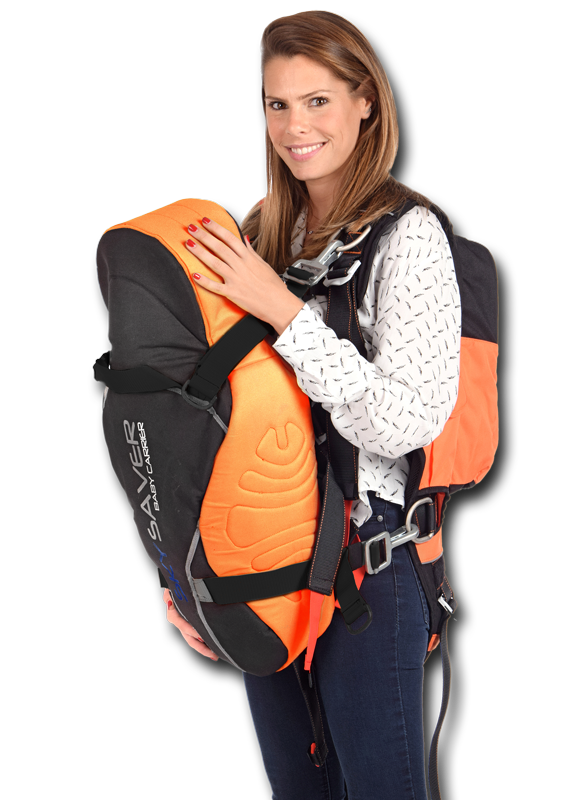
Attachable Baby Harness
Lightweight safety harness for fast and secure infant evacuation in high-rise emergencies.
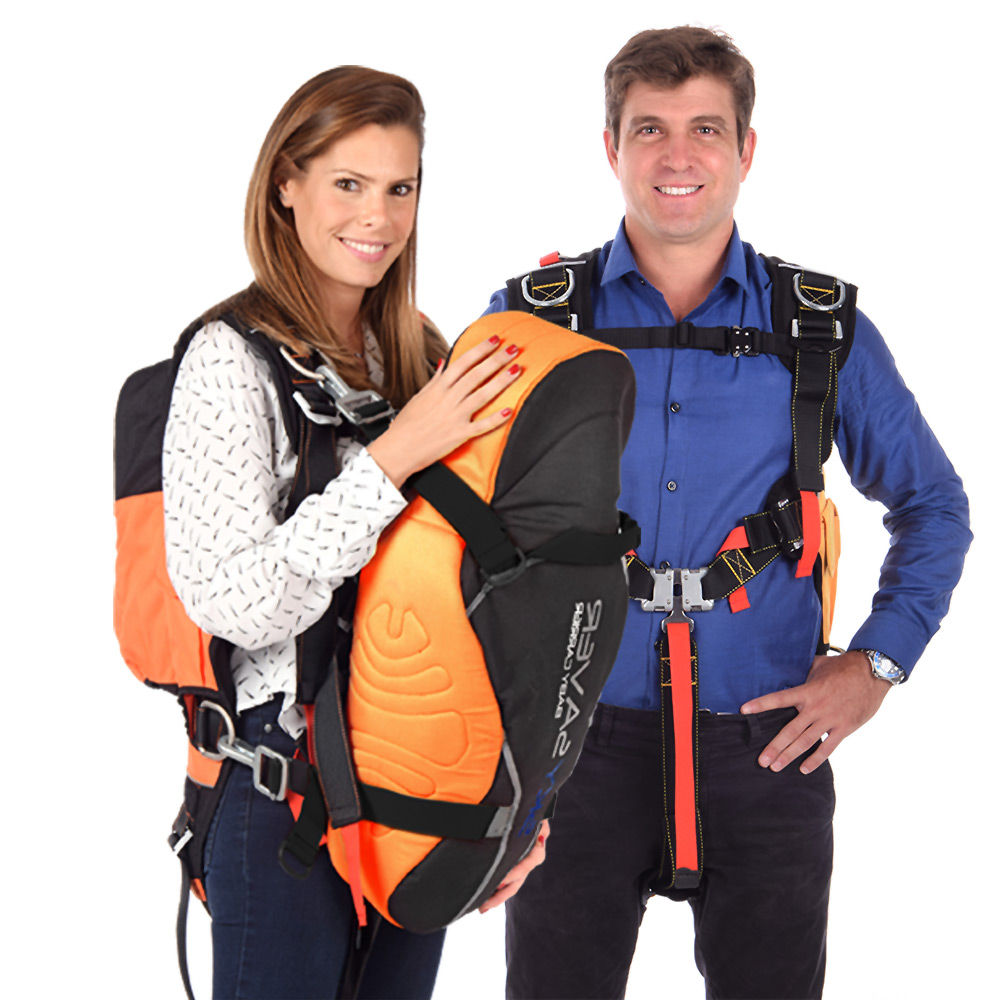
Parent Package
Complete emergency evacuation kit for the parent and dependant. Fast, safe descent from high-rise buildings.
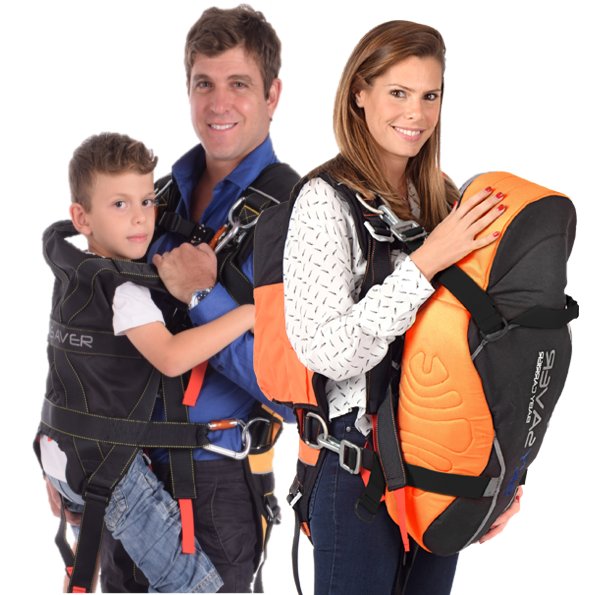
Parent Edition
Complete high-rise evacuation solution for a parent, maximum safety and fast deployment.

Single Self-Rescue Kit
Complete emergency evacuation kit for high-rise fast, safe descent during critical emergencies.
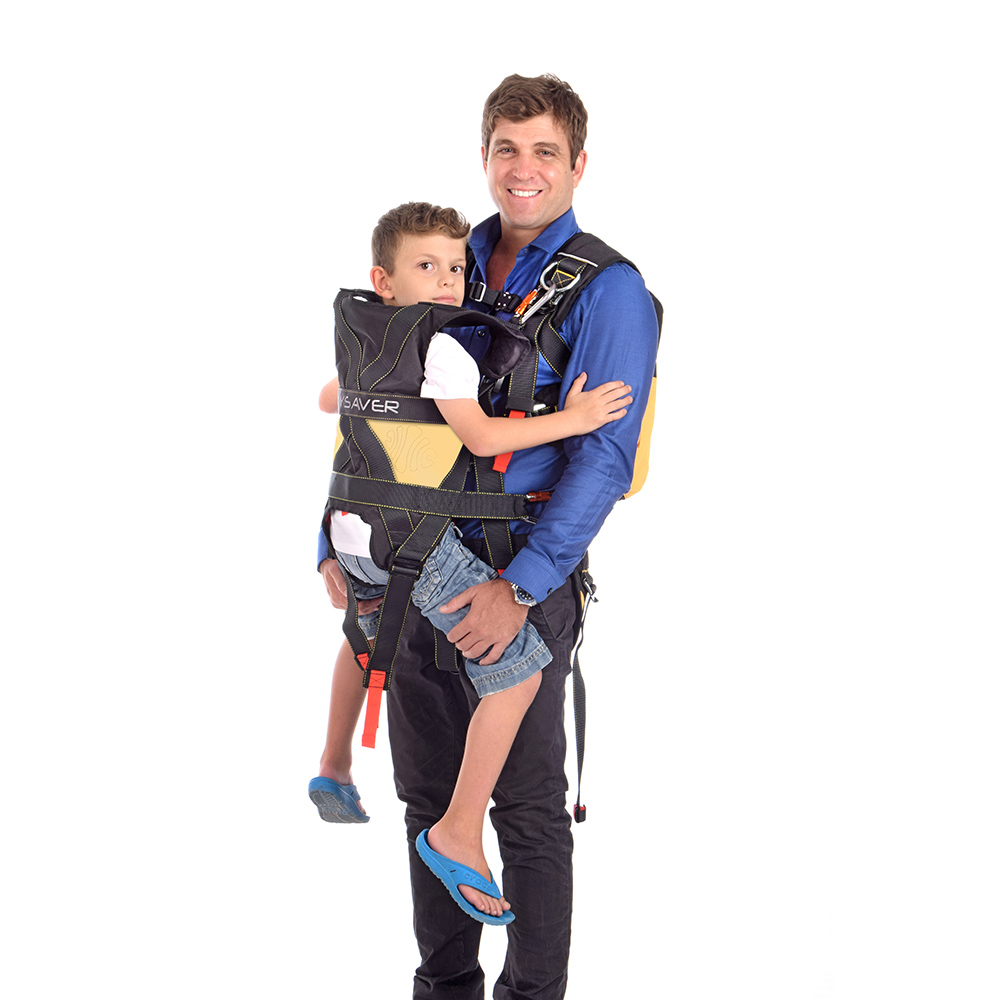
Attachable Child Harness
Lightweight child safety harness designed for secure, controlled evacuation from high-rise buildings.
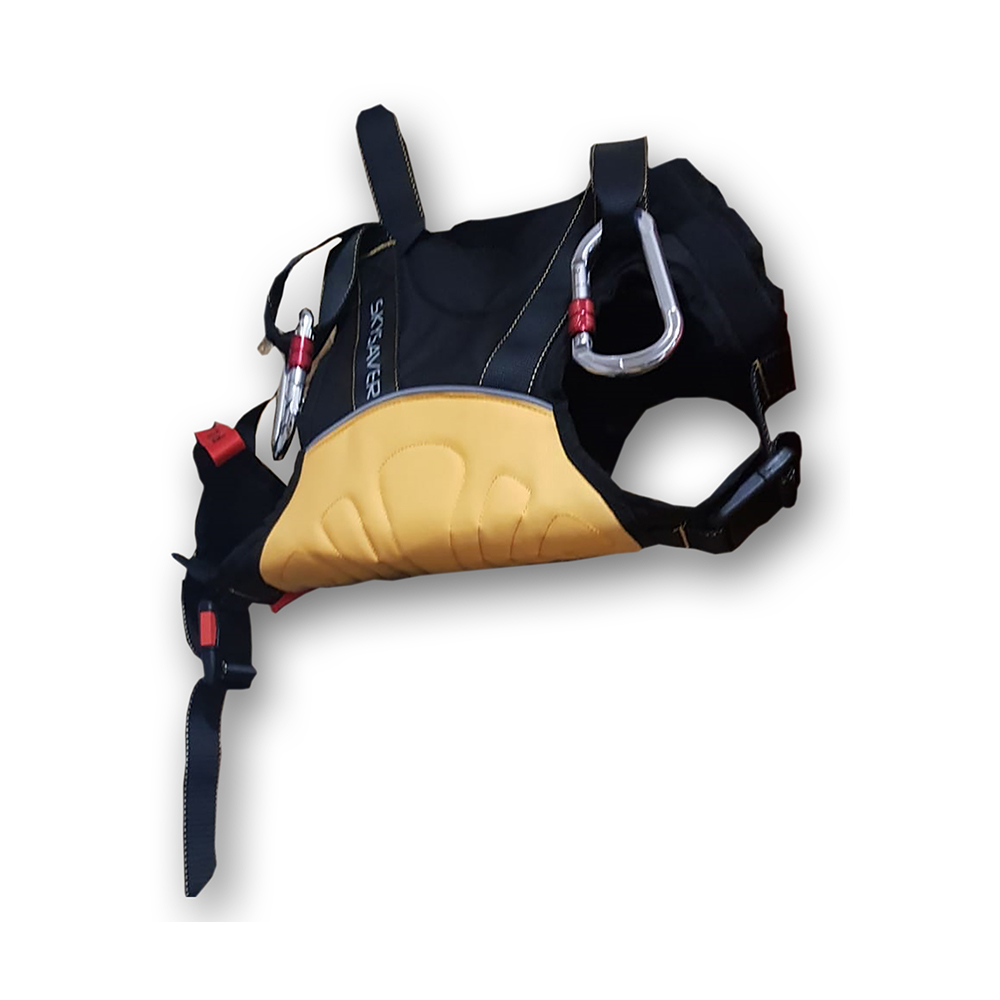
Attachable Pet Harnesses
Secure, lightweight safety harness designed for fast and controlled pet evacuation from high-rise buildings.

single Self-Rescue Harnesseses
Professional external safety harness for secure personal evacuation from high-rise buildings.
Controlled Descent Device (CDD)
Advanced backpack-based evacuation unit with harness attachment option for high-rise emergencies.