When conventional exit routes are blocked during a fire, the window becomes a focal point of desperate attention. For residents in low-rise buildings, a window can indeed be a viable escape route — if the drop is manageable and the surface below is safe to land on. For residents in mid- or high-rise buildings, the question of whether a window can serve as a safe exit is more complex, more nuanced, and more consequential. The answer depends on height, equipment, and preparation — and getting it wrong can be fatal.
When Windows Become the Only Option
In a serious high-rise fire, the scenario where conventional exit routes — stairwells and corridors — are inaccessible is not hypothetical. It is a well-documented reality that occurs with some regularity in significant fire incidents. Smoke fills stairwells. Stairwell doors can become too hot to open safely. In rapidly escalating fires, residents may have only minutes to act, and the window may be the only route to safety that does not involve moving through toxic, potentially lethal conditions.
Understanding the specific challenges of high-rise evacuation reveals why window-based escape is a serious topic worthy of careful preparation rather than something to be dismissed as an extreme last resort. For anyone living above the third floor, having a plan for window-based escape is a genuine component of comprehensive emergency preparedness.
The Physics of Window Escape
For buildings of two or three stories, a controlled drop from a window — onto grass, bushes, or other soft surfaces — is survivable and sometimes the right choice when smoke or fire make interior evacuation impossible. The physics become much less forgiving with every additional story. A fall from the fourth floor is likely to cause severe injury. A fall from the tenth floor or higher is almost universally fatal without some form of controlled descent mechanism.
Breaking a window to signal for rescue or to access fresher air is a different question from using it as an escape route. In a situation where shelter-in-place is the right strategy — fire is on a floor below, smoke has not entered the unit — a window can provide ventilation and visibility to emergency responders without being used as an exit. However, when the decision to evacuate via the window is made, the height of the drop determines everything about whether that decision is survivable.
What Happens Without the Right Equipment
Improvised window escapes from significant heights — tying bedsheets together, using electrical cords, or attempting to descend hand-over-hand along any available anchor — are among the most dangerous things a person can do in a fire emergency. The tensile strength of knotted sheets is unpredictable and frequently insufficient to support a person’s weight through multiple story drops. The grip strength required to hold body weight while descending several stories is beyond what most untrained adults can sustain. And the physics of a sudden stop at the end of an insufficient anchor are not survivable.
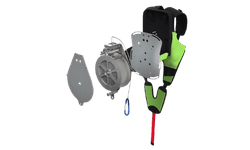
This is precisely why purpose-built controlled-descent devices exist and why they represent such a meaningful step beyond improvised alternatives. A certified device with an automatic braking mechanism eliminates the variables that make improvised rope descent so dangerous — it controls the speed mechanically, requires no grip strength from the user, and is load-rated to support the weight it needs to support.
Making a Window a Truly Safe Exit
For residents above the third floor, making a window a genuinely safe exit requires three things: a secure anchor point, a certified controlled-descent device, and advance preparation. The anchor — typically a small hook fitting installed near the window — is a one-time installation that takes minutes and creates the secure connection point the device needs. The device itself is stored in a compact backpack within arm’s reach of the window. Advance preparation means knowing how to put on the harness quickly and being mentally ready to execute the steps without hesitation.
Creating a full emergency action plan that includes window-based escape as a documented option — with each family member knowing their role — transforms what might otherwise be a chaotic, improvised attempt into a controlled, practiced procedure. The difference between a practiced response and an improvised one, under the extreme stress of a fire emergency, is substantial.
SkySaver: Turning the Window Into a Safe Exit
SkySaver‘s Controlled Descent Device is the equipment that turns a window from a desperate option into a safe, viable exit. Certified to international safety standards, supporting up to 300 lbs, and operable without training or physical strength, the SkySaver device changes the calculus of high-rise fire escape fundamentally. Instead of facing a choice between an inaccessible stairwell and an unsurvivable drop, residents with SkySaver have a third option: a controlled, safe descent from their window to the ground.
Every resident above the third floor deserves that option. Explore SkySaver’s personal escape solutions and ensure that when you look at your window, you see a safe exit rather than an impossible choice.
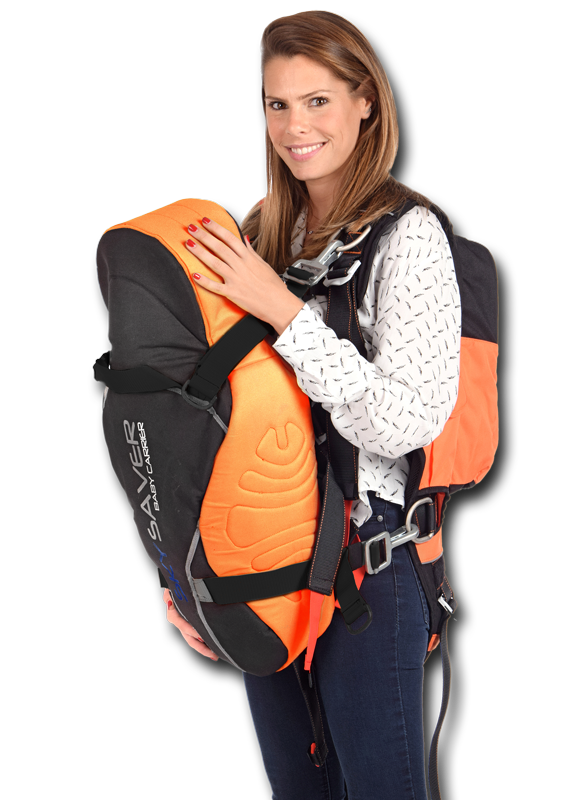
Attachable Baby Harness
Lightweight safety harness for fast and secure infant evacuation in high-rise emergencies.
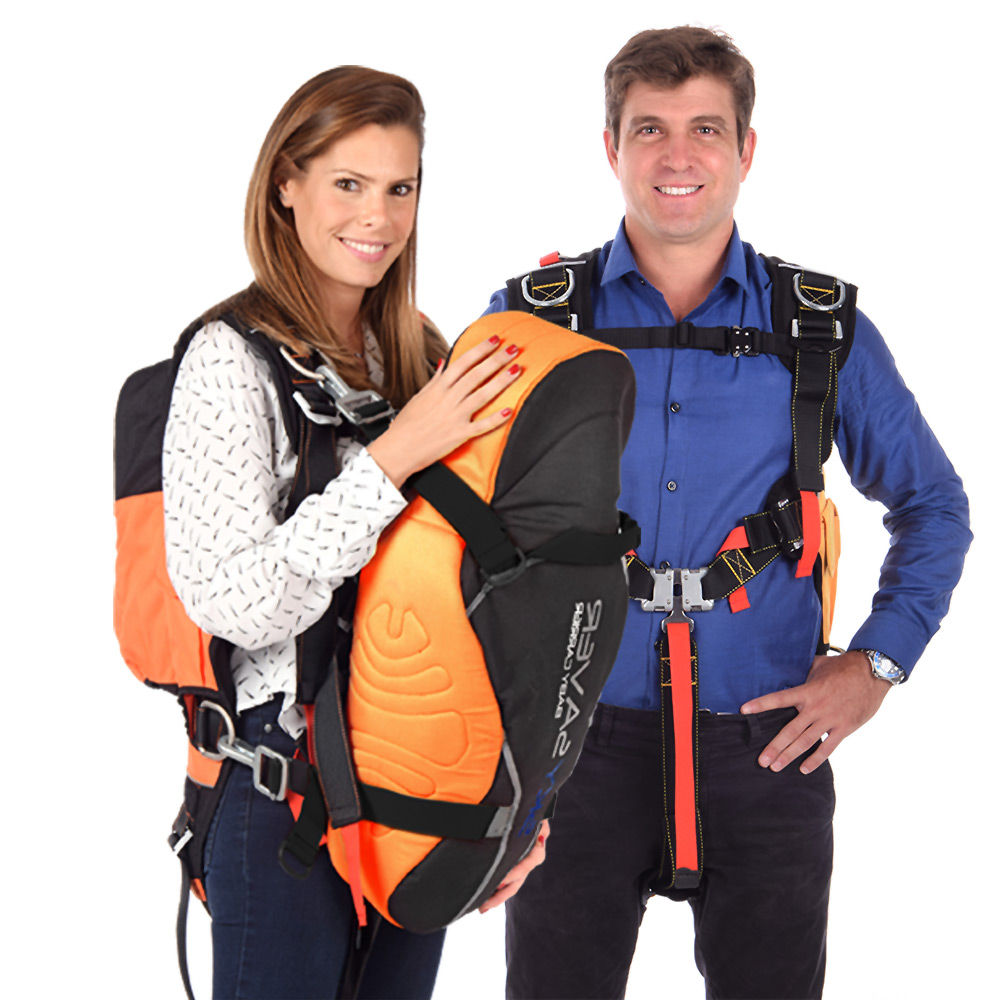
Parent Package
Complete emergency evacuation kit for the parent and dependant. Fast, safe descent from high-rise buildings.
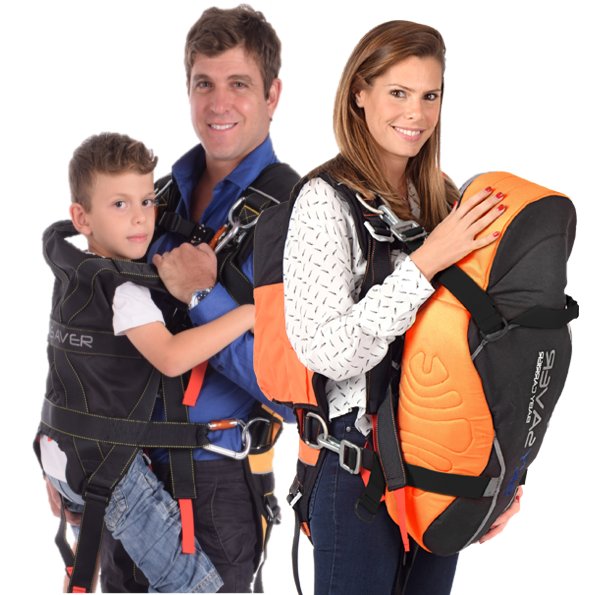
Parent Edition
Complete high-rise evacuation solution for a parent, maximum safety and fast deployment.

Single Self-Rescue Kit
Complete emergency evacuation kit for high-rise fast, safe descent during critical emergencies.
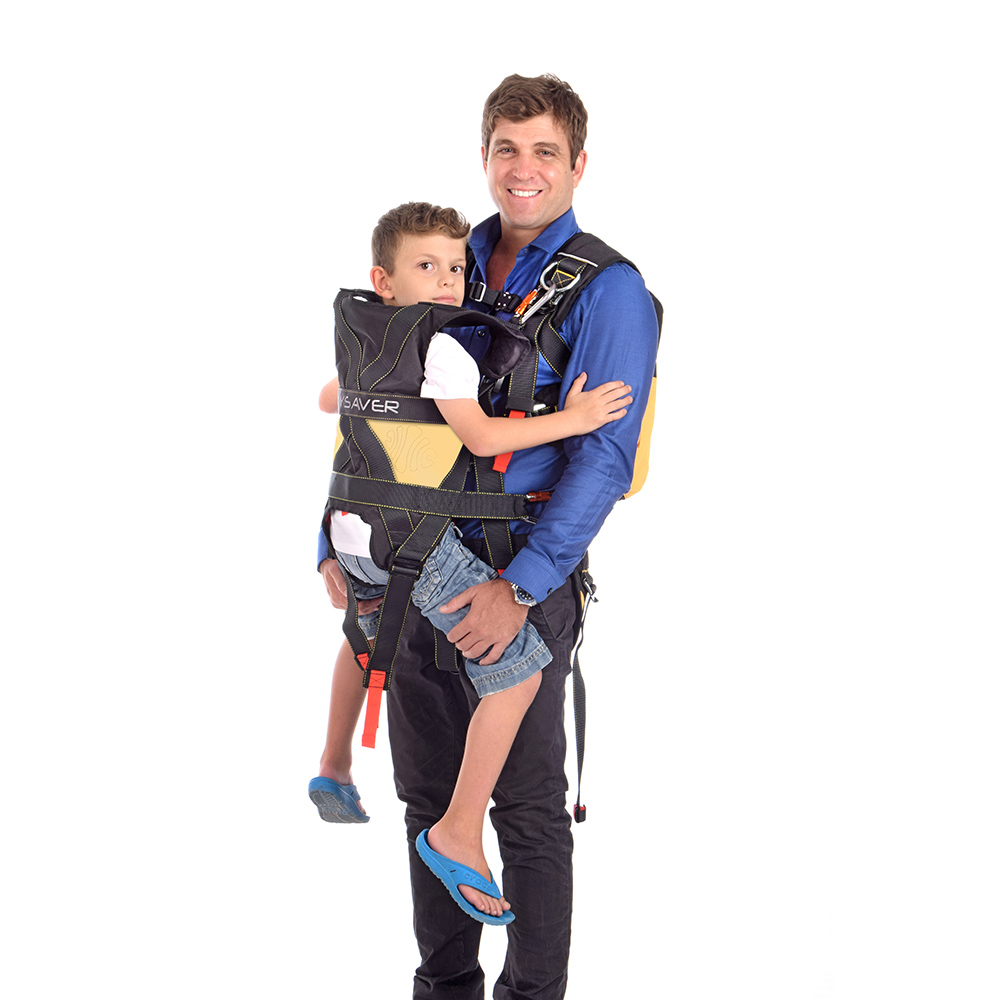
Attachable Child Harness
Lightweight child safety harness designed for secure, controlled evacuation from high-rise buildings.
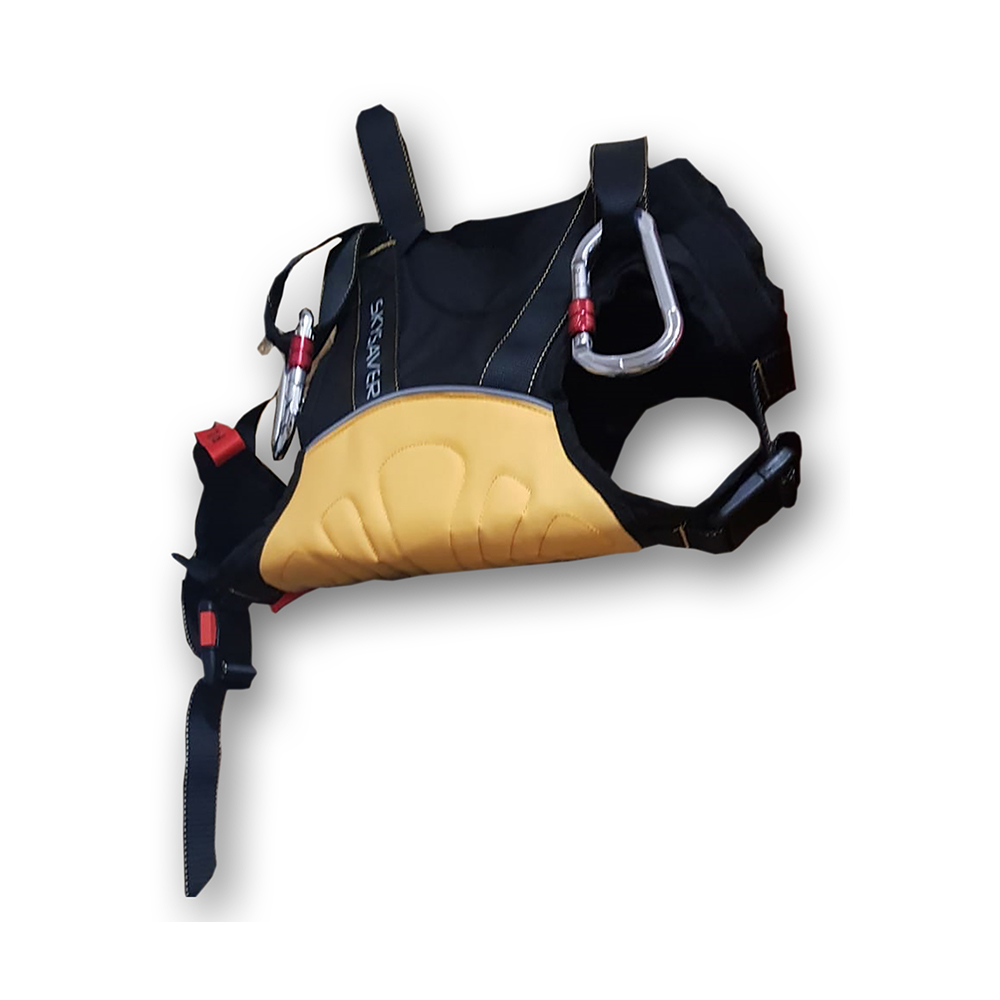
Attachable Pet Harnesses
Secure, lightweight safety harness designed for fast and controlled pet evacuation from high-rise buildings.

single Self-Rescue Harnesseses
Professional external safety harness for secure personal evacuation from high-rise buildings.
Controlled Descent Device (CDD)
Advanced backpack-based evacuation unit with harness attachment option for high-rise emergencies.