The race to build ever-taller residential towers has transformed city skylines from New York to Dubai to Shanghai. These architectural marvels — some soaring more than 400 meters into the sky — represent extraordinary feats of engineering, design, and ambition. But they also represent extraordinary challenges for fire safety. When thousands of residents live in a single structure that rises a quarter of a mile above the street, the question of what happens when fire breaks out becomes one of the most complex problems in modern engineering. The fire safety systems employed by the world’s tallest residential buildings offer a fascinating window into how engineers are solving this critical challenge.
The fundamental difficulty of fire safety in supertall residential buildings is one of scale and time. In a conventional high-rise of 20 or 30 stories, a full evacuation can be completed in 30 to 45 minutes. In a supertall building of 80 or 100 stories, the same evacuation could take two to three hours — an eternity when fire conditions can become lethal in minutes. This reality has forced engineers to rethink every aspect of high-rise evacuation, from stairwell design to refuge floor concepts to the use of elevators in emergencies, a practice that was long considered taboo but is becoming increasingly accepted in supertall buildings.
Central Park Tower, New York: Advanced Compartmentalization
Standing at 472 meters, Central Park Tower in Manhattan is one of the tallest residential buildings in the Western Hemisphere. Its fire safety system reflects the stringent requirements of New York City’s building code, which is among the most demanding in the world for high-rise construction. The building features a fully sprinklered design throughout all residential and common areas, with redundant water supply systems that ensure sprinkler coverage even if one supply line is compromised. The sprinkler system alone represents an investment of millions of dollars, but it provides the first and most critical line of defense against fire spread.
Beyond sprinklers, Central Park Tower employs sophisticated compartmentalization strategies that divide the building into fire-resistant zones. Each residential floor is designed as an independent fire compartment, with fire-rated walls, floors, and ceilings that can contain a fire to its floor of origin for a minimum of two hours. This compartmentalization buys time — time for residents on the fire floor to evacuate, time for firefighters to reach the scene, and time for residents on other floors to shelter in place safely while the fire is being addressed. The stairwell system includes pressurization fans that maintain positive air pressure in the evacuation stairs, preventing smoke from entering and maintaining clear visibility for evacuating residents.
432 Park Avenue, New York: Refuge Floors and Vertical Zoning
At 426 meters, 432 Park Avenue introduced several innovative fire safety concepts to the supertall residential category. The building incorporates dedicated refuge floors — open-air mechanical levels spaced at regular intervals throughout the height of the tower. These refuge floors serve a dual purpose: they house mechanical equipment that services the building zones above and below, and they provide safe haven areas where evacuating residents can rest, regroup, and await assistance if the descent becomes too physically demanding or if conditions in the stairwell change.
The concept of vertical zoning — dividing the building into distinct safety zones that can be managed independently — is central to 432 Park Avenue’s fire safety strategy. Each zone has its own fire alarm system, sprinkler supply, and emergency communication infrastructure. If a fire occurs in one zone, the other zones can continue to operate normally, reducing the number of people who need to evacuate and minimizing the strain on stairwell capacity. This zoned approach recognizes that in a building of this height, full simultaneous evacuation is not just impractical — it can actually be dangerous, as overcrowded stairwells create crush risks and slow evacuation to a crawl.
Burj Khalifa, Dubai: The Vertical City Approach
The Burj Khalifa, standing at 828 meters, is not primarily residential, but its mixed-use design includes residential floors that face unique fire safety challenges at extreme height. The building’s fire safety system is built around the concept of pressurized refuge areas on every 25th floor, where occupants can shelter behind fire-rated barriers while maintaining communication with the building’s fire command center. These refuge areas are supplied with their own independent air supply, ensuring breathable atmosphere even if the surrounding building is filled with smoke.
At the heights reached by the Burj Khalifa, conventional firefighting becomes extraordinarily difficult. Fire department ladders and aerial platforms cannot reach above approximately the 10th floor, meaning that fires above this level must be fought from within the building using internal standpipe systems. The Burj Khalifa addresses this with a sophisticated standpipe network that maintains water pressure at every level, supplemented by emergency pumps that can boost supply to the uppermost floors. The building code requirements that governed its construction reflect the unique engineering challenges of protecting a structure of this unprecedented scale.
Marina 101, Dubai: Lessons from High-Rise Incidents
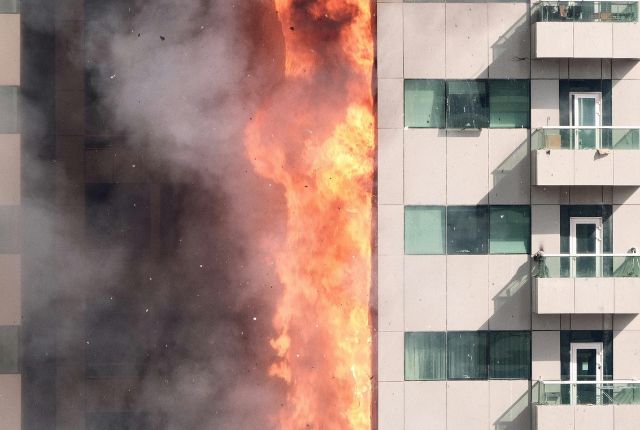
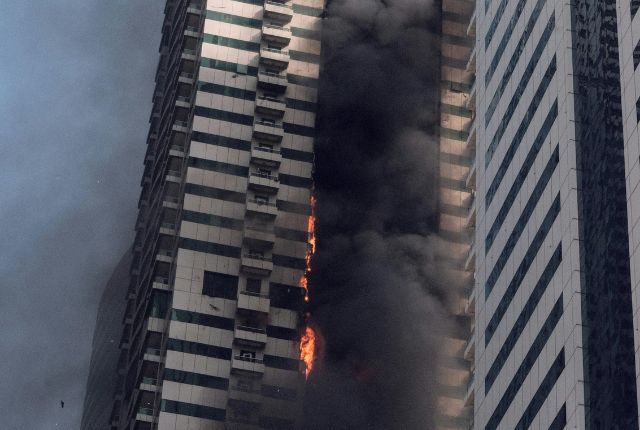
Dubai’s Marina 101, one of the tallest residential buildings in the world at 425 meters, represents both the achievements and the challenges of fire safety in supertall residential construction. The Dubai Marina district has experienced several notable facade fires in residential towers, events that have prompted significant updates to the UAE’s fire safety codes. These incidents highlighted the critical importance of facade material selection — the exterior cladding that gives a building its visual identity can also be a pathway for fire to spread rapidly up the exterior of the building, bypassing internal fire barriers.
In response to these incidents, buildings like Marina 101 have incorporated fire-resistant facade systems, enhanced fire stopping at floor slab edges where the facade meets the building structure, and exterior sprinkler systems on balconies and terraces. The lessons learned from Dubai’s fire experiences have influenced fire safety design in tall buildings globally, demonstrating that the fire safety community’s knowledge advances through both research and the painful analysis of real-world events.
What Supertall Building Fire Safety Means for Residents
For residents of the world’s tallest buildings, the sophisticated fire safety systems described here provide substantial protection, but they do not eliminate risk. No fire safety system is infallible, and the extreme heights involved in supertall living create inherent vulnerabilities that even the best engineering cannot entirely resolve. The reality is that residents above the 50th floor of any building face longer evacuation times, more limited firefighting access, and greater dependence on the building’s internal systems than residents of conventional high-rises.
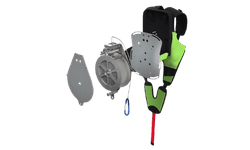
This reality makes personal preparedness not just advisable but essential for supertall building residents. Understanding your building’s evacuation plan, knowing the location of refuge floors, maintaining your own personal evacuation equipment like the SkySaver rescue backpack, and practicing emergency procedures regularly are all critical steps that complement the building’s engineered safety systems. The world’s tallest buildings showcase the remarkable capabilities of modern fire safety engineering, but they also remind us that the ultimate responsibility for safety always rests with the individuals who call these towers home.
The Future of Supertall Residential Fire Safety
As architects and engineers continue to push the boundaries of residential building height, fire safety innovation must keep pace. Emerging technologies — including AI-driven fire detection, drone-based exterior monitoring, and advanced elevator evacuation systems — promise to enhance the safety of future supertall buildings. But the fundamental principles will remain: contain the fire, protect the evacuation routes, and give residents the time and tools they need to reach safety. These principles apply whether a building is 20 stories or 200, and they begin with the personal commitment of every resident to be informed, prepared, and equipped for the emergency that everyone hopes will never come.