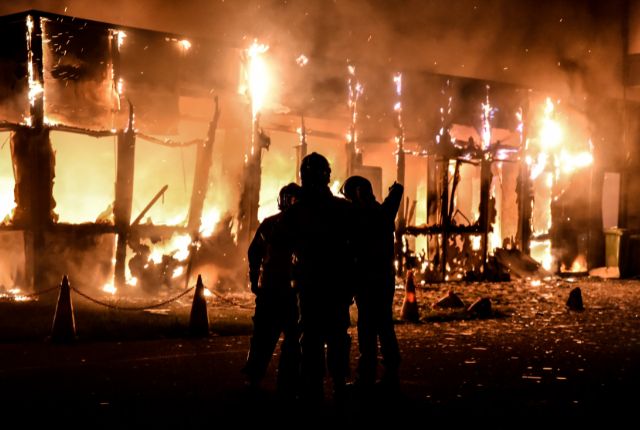
When a fire alarm sounds in a high-rise building, the human body responds with an immediate flood of adrenaline. The heart rate spikes, breathing becomes shallow, and rational thinking gives way to primal fear. In these critical moments, the difference between a safe evacuation and a tragic outcome often comes down to one factor: the ability to stay calm. Understanding how to regulate your body’s stress response during a high-rise emergency is not just a psychological advantage — it is a survival skill that can save your life and the lives of those around you.
Panic is the silent killer in building emergencies. Studies from fire science researchers have consistently shown that people who panic during evacuations are far more likely to make dangerous decisions — running toward blocked exits, ignoring escape routes, or freezing in place. The good news is that calmness is a trainable response. With the right techniques and preparation, anyone can learn to override the panic response and think clearly when it matters most.
The Science Behind Panic in Emergency Situations
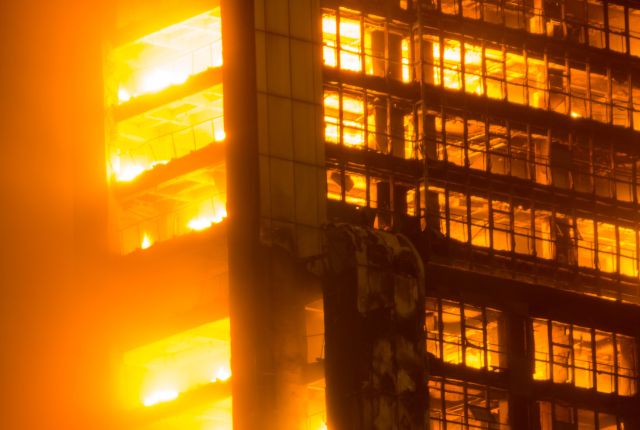
When the brain perceives a life-threatening situation, the amygdala triggers what scientists call the “fight, flight, or freeze” response. This ancient survival mechanism floods the body with cortisol and adrenaline, preparing muscles for action while simultaneously shutting down higher-order thinking. In a high-rise fire scenario, this means residents may struggle to remember evacuation routes they have walked hundreds of times, or fail to recall basic fire safety procedures they learned during building orientation.
The physiological effects of panic are particularly dangerous in smoke-filled environments. Rapid, shallow breathing — a hallmark of the panic response — causes people to inhale more smoke and toxic gases. This creates a devastating feedback loop: panic leads to faster breathing, which leads to greater smoke inhalation, which leads to disorientation, which leads to more panic. Breaking this cycle requires deliberate intervention through controlled breathing techniques that can be practiced and mastered before an emergency ever occurs.
Box Breathing: The Military-Tested Technique for Crisis Calm
Among the most effective techniques for managing acute stress is box breathing, also known as four-square breathing. This method, used extensively by Navy SEALs, first responders, and elite athletes, involves breathing in a controlled pattern: inhale for four seconds, hold for four seconds, exhale for four seconds, and hold again for four seconds. The beauty of this technique lies in its simplicity — it can be performed anywhere, requires no equipment, and produces measurable calming effects within just two to three cycles.
During a high-rise emergency, box breathing serves multiple purposes beyond calming the mind. By slowing the breathing rate, it reduces the volume of smoke inhaled per minute. It also activates the parasympathetic nervous system, which counteracts the adrenaline surge and restores some capacity for rational decision-making. Residents who practice this technique regularly — even just a few minutes per day — develop a near-automatic response that kicks in when stress levels peak. This means that in a real emergency, the body shifts into calm mode faster and more reliably.
Grounding Techniques for Smoke and Darkness
High-rise fires often plunge corridors and stairwells into near-total darkness as smoke fills the space. In these conditions, visual disorientation amplifies fear and can cause people to lose their sense of direction entirely. Grounding techniques — methods that anchor awareness to the present moment through sensory input — become invaluable tools for maintaining orientation and composure.
The “5-4-3-2-1” grounding method adapts well to emergency situations. Even when visibility is zero, a person can focus on five things they can feel (the wall, the floor, the handrail, their clothing, their own heartbeat), four things they can hear (alarms, voices, footsteps, wind), and three things they can physically do (breathe slowly, move forward, call out). This systematic engagement of the senses pulls the mind away from catastrophic thinking and back to the immediate task of evacuation. For residents of high-rise buildings, practicing this technique during routine activities — walking down the stairwell, touching the walls and handrails — builds neural pathways that activate automatically under stress.
Preparing Your Mind Before the Emergency Happens
The most effective way to stay calm during an emergency is to prepare for it long before it happens. Mental rehearsal, also known as visualization, is a technique used by astronauts, surgeons, and military personnel to prepare for high-stress scenarios. By vividly imagining the sights, sounds, and sensations of a fire evacuation — the smell of smoke, the sound of alarms, the heat radiating from a nearby fire — the brain creates memory templates that reduce the novelty and shock of the real event.
Building residents should conduct personal evacuation drills that go beyond simply walking to the nearest exit. These drills should include practicing low-crawling through imagined smoke, counting stairwell flights with eyes closed, and rehearsing the use of emergency equipment. Families living in high-rise apartments should discuss and practice their evacuation plans together, assigning roles and establishing meeting points. The more familiar the emergency scenario feels, the less likely panic is to take hold when it becomes real.
The Role of Emergency Equipment in Psychological Readiness
There is a powerful psychological connection between preparedness and calmness. Research in disaster psychology consistently shows that people who feel prepared experience lower levels of anxiety and make better decisions during emergencies. This is why having the right emergency evacuation equipment readily accessible does more than provide a physical escape route — it provides peace of mind that fundamentally changes how the brain responds to crisis.
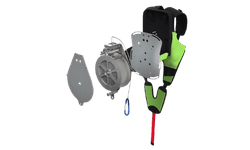
Personal evacuation devices, such as the SkySaver rescue backpack, represent a paradigm shift in high-rise emergency preparedness. Knowing that a controlled descent device is available and ready to use — even if primary exit routes are blocked — gives residents a concrete alternative to the helplessness that fuels panic. This sense of agency, the feeling that you have options and can take action, is one of the most powerful antidotes to the freeze response that traps people in dangerous situations.
Building a Culture of Calm Preparedness
Individual techniques are essential, but the most resilient high-rise communities are those that build collective preparedness into their culture. Building management teams can organize regular emergency response workshops that teach breathing techniques, grounding methods, and evacuation procedures together. Floor wardens trained in both the physical and psychological aspects of evacuation become anchors of calm that can guide entire groups of residents to safety. When calmness is treated as a community value rather than an individual trait, the entire building becomes safer for everyone.
The next time you walk through the corridors of your high-rise building, take a moment to practice. Breathe in for four counts, hold for four, exhale for four, hold for four. Touch the stairwell handrail and count the flights. Visualize your evacuation route. These small investments in mental preparedness may one day prove to be the most important preparations you have ever made.