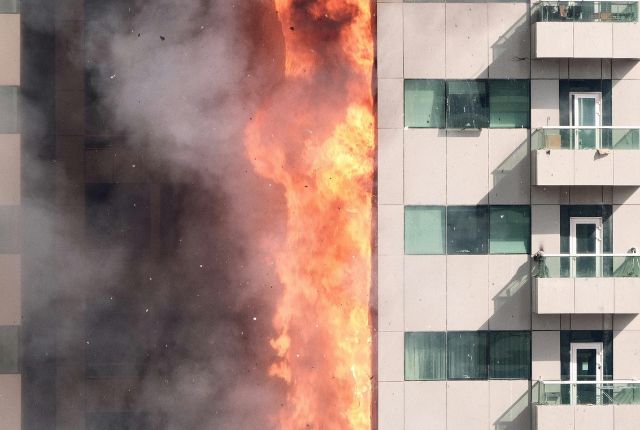
Earthquakes and fires are devastating events on their own. When they occur simultaneously — or when one triggers the other — the result is a compounded disaster that tests the limits of human preparedness and building resilience. For residents of high-rise buildings in seismically active regions, the possibility of a combined fire-earthquake event is not a theoretical exercise. It is a documented reality that has played out in cities from San Francisco to Tokyo, and one that demands a specific, well-rehearsed response plan that goes beyond standard single-hazard preparedness.
The relationship between earthquakes and fires is deeply intertwined. Seismic events rupture gas lines, topple electrical equipment, and crack building structures in ways that create immediate ignition sources. In the aftermath of the 1994 Northridge earthquake in Los Angeles, more than 100 fires broke out across the city within hours, many in multi-story buildings where gas lines had been severed by the shaking. When a fire ignites in a building that has already been structurally compromised by an earthquake, evacuation becomes exponentially more dangerous, and the standard rules of high-rise evacuation must be adapted to account for both hazards simultaneously.
How Earthquakes Create Fire Hazards in High-Rise Buildings
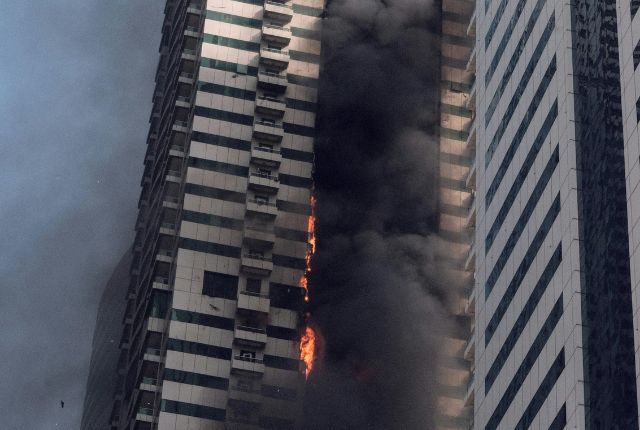
The primary mechanism by which earthquakes cause fires in high-rise buildings is through damage to gas infrastructure. Natural gas lines that run through a building’s core and branch out to individual units are designed to flex with normal building movement, but the violent lateral forces of an earthquake can shear connections, crack pipes, and rupture valves. The escaping gas accumulates in enclosed spaces — apartments, mechanical rooms, elevator shafts — where a single spark from damaged electrical wiring can trigger an explosion or sustained fire.
Electrical systems present the second major fire risk after an earthquake. When a building shakes, electrical conduits can be damaged, creating short circuits that generate intense heat. Transformers and switchgear in the building’s basement or mechanical floors can be damaged, releasing flammable coolant oils. Even battery backup systems, including the lithium-ion batteries increasingly common in modern buildings, can be physically damaged by seismic forces, leading to thermal runaway and fire. The combination of multiple ignition sources with disrupted fire suppression systems — sprinkler pipes can break during earthquakes — creates conditions where fires can establish and spread virtually unchecked.
The Compounded Challenge of Evacuating During Both Events
Evacuating a high-rise building during a combined fire-earthquake event presents challenges that neither hazard presents alone. Earthquake damage may have compromised stairwells — the primary evacuation route during fires — with cracked walls, shifted landings, or debris blocking passages. Fire may have filled corridors with smoke on certain floors, while earthquake damage makes alternative routes structurally uncertain. The elevators, already off-limits during fires, may be physically jammed or their shafts compromised by both the seismic damage and the fire.
The psychological burden on evacuees is also significantly greater during a combined event. The fear of aftershocks — which can occur minutes to hours after the initial earthquake — adds a layer of urgency and anxiety to an already terrifying fire evacuation. People must make split-second decisions about whether to shelter in place against the earthquake while a fire approaches, or to evacuate through a structurally uncertain building. These are impossible choices that no one should have to make without prior preparation and a clear understanding of the principles that should guide their decisions.
Decision Framework: When to Evacuate and When to Shelter
The key principle in a combined fire-earthquake disaster is to address the most immediate threat first while maintaining awareness of the secondary hazard. During active shaking, the earthquake takes priority. Drop, cover, and hold on — get under sturdy furniture or against an interior wall, protect your head and neck, and wait for the shaking to stop. Attempting to evacuate during the earthquake itself dramatically increases the risk of injury from falling debris, breaking glass, and structural collapse.
Once the shaking stops, the fire threat takes priority. Assess your immediate surroundings for signs of fire: the smell of gas, visible smoke, unusual heat, or the sound of flames. If fire is present or imminent, begin evacuation immediately, but do so with earthquake awareness. Test each stairwell section before committing to it — look for structural damage, check for stability, and be prepared to reverse course if conditions deteriorate. If stairwells are compromised, residents should be prepared with alternative evacuation methods. A personal descent device like the SkySaver backpack becomes invaluable in these scenarios, providing an evacuation option that is independent of the building’s internal infrastructure.
Preparing for the Combined Disaster Before It Strikes
Preparation for a combined fire-earthquake event starts with understanding your building. Know where the gas shutoff valves are located on your floor and in your unit. Learn the location of all stairwells, not just the one closest to your door. Identify structural features of your building — older concrete frame buildings behave very differently in earthquakes than modern steel-frame structures, and this affects both the likelihood of earthquake-induced fires and the reliability of evacuation routes.
Your emergency kit should be designed for both hazards simultaneously. Include a flashlight with fresh batteries, as both earthquakes and fires can knock out power. Pack a wet bandana or smoke hood for smoke protection. Include sturdy shoes — broken glass is a major hazard after earthquakes, and you may need to walk through debris-strewn corridors during a fire evacuation. Keep a survival checklist posted where every family member can see it, and practice the sequence of actions until it becomes automatic.
Community Resilience in Seismically Active High-Rise Districts
Buildings in earthquake-prone regions have a collective responsibility to prepare for compound disasters. Building management should conduct combined fire-earthquake drills at least annually, testing evacuation procedures under scenarios where certain stairwells are designated as “damaged” and unavailable. Fire suppression systems should be regularly inspected with attention to their seismic resilience — are sprinkler connections designed to withstand shaking? Are fire pump rooms reinforced against structural damage? These questions should be asked, and answered, before the ground begins to shake.
The cities most vulnerable to combined fire-earthquake disasters — Los Angeles, San Francisco, Tokyo, Istanbul, Mexico City — are also home to some of the world’s densest concentrations of high-rise buildings. For the millions of people who live and work in these buildings, preparedness is not optional. It is a fundamental requirement of urban life in seismic zones. The combined disaster may be rare, but when it comes, the prepared will have options. The unprepared will have none.