The history of high-rise fires is written in tragedy, but it is also a history of progress. Every catastrophic fire in a tall building has prompted investigations, reforms, and innovations that have made subsequent buildings safer. Understanding the worst high-rise fires in history is not an exercise in morbidity — it is essential education for anyone who lives or works in a tall building, because the lessons learned from these events directly shape the fire safety systems that protect us today. From the early skyscraper era to the modern age, each fire has revealed vulnerabilities, challenged assumptions, and driven the evolution of building codes, firefighting techniques, and fire safety standards worldwide.
What makes high-rise fires particularly devastating is the combination of height, density, and limited escape options. In a low-rise building, occupants are typically never more than a few stories from the ground, and firefighters can reach them from the exterior. In a high-rise, occupants above the fire may be dozens of floors from safety, with only internal stairwells as escape routes. When those stairwells become compromised — by smoke, structural failure, or overcrowding — the consequences can be catastrophic. The fires described here represent the moments when these vulnerabilities were exposed most painfully, and when the fire safety community was forced to confront and address them.
The Joelma Building Fire: São Paulo, 1974
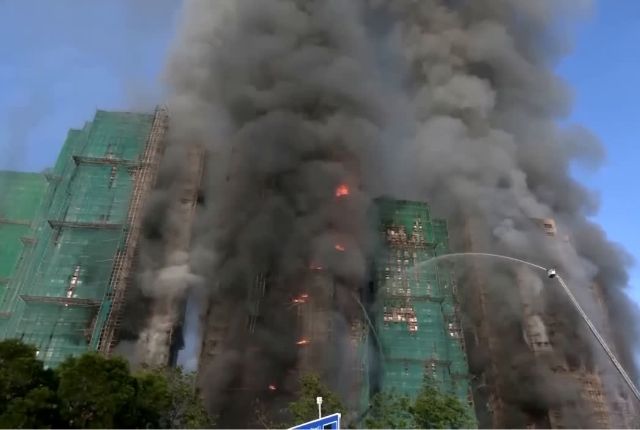
On February 1, 1974, a fire broke out on the 12th floor of the 25-story Joelma Building in downtown São Paulo, Brazil. The fire, caused by an overloaded air conditioning unit, spread rapidly through the building, which lacked sprinklers, fire-rated stairwell enclosures, and adequate emergency exits. Within minutes, both stairwells became impassable due to smoke and heat, trapping hundreds of workers on the upper floors. In their desperation, many occupants climbed to the roof, hoping for helicopter rescue that proved impossible due to the intense heat and smoke rising from the burning building below.
The final toll was devastating: 191 people died and over 300 were injured. The Joelma fire exposed the catastrophic consequences of inadequate fire safety in tall buildings and became a turning point for building codes in Brazil and throughout South America. The investigation revealed that the building had no sprinkler system, no fire alarm, no emergency lighting, and no fire-resistant construction in its stairwells. Every one of these deficiencies became a mandatory requirement in subsequent building codes. For high-rise residents today, the Joelma fire serves as a stark reminder of why the fire safety systems in our buildings exist and what can happen when they are absent.
The MGM Grand Hotel Fire: Las Vegas, 1980
The MGM Grand Hotel fire on November 21, 1980, killed 85 people and injured hundreds more in what was then the second-deadliest hotel fire in American history. The fire started in a restaurant on the ground floor and spread with extraordinary speed through the casino’s open floor plan. But the majority of deaths did not occur near the fire itself — they occurred on upper floors of the 26-story hotel tower, where guests were killed by smoke and toxic gases that migrated upward through the building’s elevator shafts, stairwells, and HVAC systems.
The MGM Grand fire fundamentally changed how engineers and code officials thought about smoke migration in tall buildings. The investigation revealed that the building’s HVAC system had distributed toxic smoke throughout the tower, delivering lethal concentrations of carbon monoxide to guest rooms far from the fire. This finding led to sweeping changes in building codes, including requirements for automatic HVAC shutdown during fire events, smoke dampers in ductwork, and — most significantly — mandatory sprinkler systems in all new high-rise hotels and, eventually, in all new high-rise buildings throughout the United States.
The First Interstate Bank Fire: Los Angeles, 1988
The First Interstate Bank Building fire in Los Angeles on May 4, 1988, burned for more than three hours and destroyed four and a half floors of the 62-story tower. One person died — a building maintenance worker — and over 40 were injured. While the death toll was remarkably low for a fire of this magnitude, the event was significant because it demonstrated the limitations of firefighting capabilities in supertall buildings. The fire burned above the reach of the fire department’s tallest aerial ladders, and the building’s internal standpipe system proved insufficient to deliver water at the volumes needed for effective suppression.
The First Interstate Bank fire led directly to significant upgrades in high-rise firefighting requirements in Los Angeles and nationwide. New requirements included enhanced standpipe system capacity, dedicated fire department elevators, improved emergency communication systems, and mandatory fire command centers in tall buildings. The fire also demonstrated the critical importance of building sprinklers: the fire stopped spreading when it reached a floor that had been retrofitted with sprinklers as part of a renovation project, providing dramatic real-world evidence of sprinkler effectiveness.
The Windsor Tower Fire: Madrid, 2005
On February 12, 2005, a fire engulfed the 32-story Windsor Tower in Madrid, Spain, burning for more than 24 hours and eventually causing the partial collapse of the upper floors of the building. While no one died — the building was unoccupied at the time of the fire — the event was significant for what it revealed about fire resistance in modern high-rise construction. The building, constructed in the 1970s, lacked sprinklers and had fire protection systems that did not meet contemporary standards.
The Windsor Tower fire became a case study in the behavior of uncontrolled fire in high-rise structures. The fire burned so intensely and for so long that structural steel elements lost their load-bearing capacity, leading to progressive collapse of upper floors. This outcome underscored the critical importance of active fire suppression — particularly sprinklers — in preventing fires from reaching the intensity and duration needed to compromise structural integrity. For residents of older high-rise buildings that may lack modern fire suppression systems, the Windsor Tower fire is a compelling argument for both building-level retrofitting and personal evacuation preparedness.
Grenfell Tower: London, 2017
The Grenfell Tower fire on June 14, 2017, killed 72 people and shocked the world with its speed and ferocity. The 24-story residential tower in west London was engulfed by fire that spread rapidly up the building’s exterior, fueled by combustible cladding that had been installed during a recent renovation. The fire bypassed the building’s internal fire compartmentalization, spreading from floor to floor via the exterior and filling corridors and stairwells with toxic smoke. Residents who followed the building’s official advice to stay in their apartments found themselves trapped as conditions deteriorated around them.
Grenfell became the defining fire safety event of the 21st century, prompting investigations, inquiries, and code reforms across the globe. The fire exposed critical failures in building regulations, construction practices, and emergency response procedures. The investigation revealed that the combustible cladding system had been installed despite failing fire safety tests, and that regulatory oversight had failed to prevent its use. The aftermath of Grenfell has driven massive cladding remediation programs in the UK and internationally, strengthened building inspection requirements, and fundamentally changed the conversation about high-rise resident safety.
The Ongoing Imperative of Learning from Tragedy
Every fire described here led to measurable improvements in building safety. Sprinkler requirements, smoke control systems, fire-resistant construction, cladding regulations — all of these advances emerged from the investigation of catastrophic fires. But the cycle of tragedy and reform carries an inherent delay: improvements come after the event, not before. This is why personal preparedness is so important. Building codes will continue to evolve, and future fires will reveal new vulnerabilities that lead to new reforms. In the meantime, the most reliable protection available to any high-rise resident is their own knowledge, planning, and emergency equipment. The lessons of history are clear: buildings can fail, systems can be overwhelmed, and the only safety factor that is entirely within your control is your own preparedness.