
The traditional smoke detector has served as the cornerstone of residential fire safety for decades. It is a simple, reliable device that has saved countless lives. But in the evolving landscape of high-rise living, where building complexity and occupant density continue to increase, the standalone smoke detector is no longer sufficient. Smart home technology is revolutionizing fire detection and response, creating interconnected systems that can identify threats earlier, alert residents faster, and even take autonomous action to protect lives before emergency services arrive. For high-rise building residents, these technologies represent a quantum leap in personal fire safety.
The limitations of traditional smoke detectors become especially apparent in high-rise environments. A conventional detector in a bedroom may alert the occupant of that room, but it does nothing to warn residents in other parts of a large apartment, let alone on other floors. It cannot distinguish between a burning dinner and a genuine structural fire. It offers no guidance on evacuation routes and provides no information to building management about the location or severity of the threat. Smart home fire detection systems address every one of these shortcomings, transforming passive alarms into active safety networks that think, communicate, and respond.
Interconnected Smoke and Heat Detection Systems
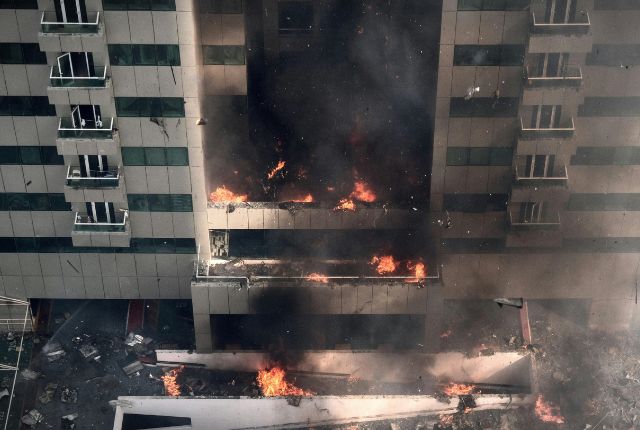
The foundation of smart home fire safety is the interconnected detector network. Devices like smart smoke and heat detectors communicate wirelessly with each other, so when one detector activates, every unit in the home sounds simultaneously. This is particularly valuable in large high-rise apartments where a fire in a distant room might not be heard through closed doors if only a single local detector is sounding. Modern smart detectors go further by sending instant notifications to smartphones, meaning residents are alerted even when they are away from home — critical for identifying fires in unoccupied units before they spread to neighboring apartments.
Beyond basic connectivity, the latest generation of smart detectors incorporates multiple sensing technologies in a single unit. Photoelectric sensors detect smoldering fires, ionization sensors respond to fast-flaming fires, and temperature sensors identify rapid heat increases. Some advanced models add carbon monoxide detection and even air quality monitoring, creating a comprehensive atmospheric threat detection system. When these multi-sensor devices are networked together, they can provide building management with precise information about the type, location, and progression of a fire — data that can be relayed to responding firefighters before they even enter the building.
Smart Cameras and Thermal Imaging for Early Detection
Visual detection technology is emerging as a powerful complement to traditional smoke and heat sensing. Smart cameras equipped with AI-powered analytics can identify the visual signatures of fire — flickering light patterns, smoke plumes, unusual heat shimmer — and alert residents or building systems before enough smoke has been produced to trigger a conventional detector. In common areas of high-rise buildings, such as parking garages, lobbies, and mechanical rooms, these visual detection systems can shave precious minutes off response times.
Thermal imaging cameras, once available only to firefighters and military personnel, are becoming increasingly accessible for residential use. Smart thermal sensors installed at key points in a high-rise apartment can detect abnormal temperature patterns — an overheating electrical panel behind a wall, a hot spot developing in a ceiling near faulty wiring, or heat building in an HVAC duct. These sensors provide warnings of fire conditions that are developing but have not yet produced smoke or flame, enabling intervention at the earliest possible stage when the threat is still manageable and appropriate action can be taken calmly.
Automated Response: Smart Homes That Fight Fires
Detection is only half of the equation. The true potential of smart home technology lies in its ability to take automated action in response to detected threats. When a smart fire detection system activates, it can trigger a cascade of protective responses without waiting for human intervention. Smart HVAC systems can shut down to prevent smoke from being circulated through ductwork. Smart locks can automatically disengage to ensure exit routes are clear. Connected lighting systems can illuminate evacuation paths, and smart window controllers can open vents to allow smoke to escape while providing fresh air at lower levels.
Voice assistant integration adds another dimension to automated fire response. When fire is detected, smart speakers throughout the apartment can announce the specific location of the threat and provide verbal evacuation instructions tailored to the occupant’s position in the home. For elderly residents or those with mobility challenges living in high-rise buildings, these voice-guided evacuations can be life-saving, providing step-by-step guidance when panic and disorientation would otherwise take hold. The system can even contact emergency services automatically, providing the building address, apartment number, and detected fire location without requiring the occupant to make a phone call.
Integration with Building-Wide Safety Systems
The most powerful smart fire safety configurations are those that bridge the gap between individual apartment systems and building-wide safety infrastructure. In forward-thinking high-rise buildings, smart home devices in individual units can communicate with the building’s central fire alarm system, providing floor-by-floor intelligence that helps building management and fire departments understand exactly where the threat is and how it is evolving. This integration enables more targeted evacuations — rather than evacuating an entire 50-story building, management can prioritize the fire floor and immediately adjacent floors while monitoring conditions throughout the rest of the structure.
Smart home technology also enhances the effectiveness of personal emergency evacuation equipment. Connected systems can remind residents to check and maintain their safety devices, send alerts when batteries need replacement, and even guide residents to their emergency equipment during an actual event. When every second counts, knowing exactly where your evacuation device is located and having a clear path to reach it can make the difference between a successful escape and a tragic outcome. The SkySaver rescue backpack, stored in a designated location and paired with smart home alerts, becomes part of an integrated safety ecosystem rather than a standalone device.
Building Your Smart Fire Safety Network
For high-rise residents looking to enhance their fire safety through smart technology, the transition does not need to happen all at once. Starting with interconnected smart smoke detectors — replacing existing units one room at a time — provides immediate benefits in terms of network alerting and smartphone notifications. Adding a smart carbon monoxide detector extends protection to this invisible threat. Over time, integrating smart lighting for evacuation path illumination and voice assistants for verbal guidance creates a comprehensive system that dramatically improves survival odds in a fire emergency.
The future of high-rise fire safety is not a single device on the ceiling beeping when smoke reaches it. It is an intelligent, interconnected network of sensors, actuators, and communication systems that work together to detect threats earlier, respond faster, and guide residents to safety with precision and clarity. Smart home technology is making this future available today, and for anyone living above the reach of a fire truck ladder, embracing these innovations is not just smart — it is essential.