Urbanization is accelerating at an unprecedented pace across much of the developing world. Cities in Asia, Africa, and the Middle East are expanding vertically at breathtaking speed, with thousands of new high-rise towers constructed each year to accommodate surging populations. While this growth brings economic opportunity and modernization, it also introduces serious fire safety challenges that many of these cities are only beginning to address. The combination of rapid construction timelines, evolving building codes, and sometimes limited firefighting infrastructure creates a landscape where high-rise fire risks demand urgent attention from residents, developers, and policymakers alike.
Understanding the unique fire dangers in the world’s fastest-growing cities is not just an academic exercise. It is a matter of life and death for the millions of people who live and work in these towering structures every day. Whether you reside in a newly built apartment tower in Lagos, a mixed-use skyscraper in Mumbai, or a luxury residential complex in Dubai, knowing the risks and how to prepare for them can make all the difference when seconds count. For those seeking personal safety solutions, a personal rescue device from SkySaver offers a proven way to ensure you have an escape option no matter where you are in the building.
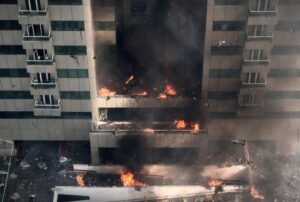
Why Rapid Urban Growth Outpaces Fire Safety Infrastructure
When cities grow quickly, the demand for housing and commercial space often outstrips the ability of local governments to enforce robust building codes and fire safety regulations. Developers face intense pressure to complete projects on tight schedules, and in some jurisdictions, building inspections may be inconsistent or understaffed. This creates situations where fire-resistant materials are substituted for cheaper alternatives, sprinkler systems are installed improperly or omitted entirely, and emergency exit routes do not meet international safety standards.
In cities like Dhaka, Bangladesh, and Lagos, Nigeria, the pace of vertical construction has been staggering over the past decade. Dhaka alone has seen thousands of new multi-story buildings rise in neighborhoods where fire stations remain few and far between. When a fire breaks out on an upper floor of a twenty-story building and the nearest fire truck with an aerial ladder can only reach the eighth floor, the consequences can be catastrophic. This gap between building height and firefighting capability is one of the most critical vulnerabilities in fast-growing cities around the world.
The situation is compounded by informal construction practices that persist in many rapidly urbanizing areas. Buildings may be constructed with inadequate fire separations between units, lack proper ventilation systems to prevent smoke spread, or feature electrical wiring that does not meet safety standards. As we explored in our article on how building codes differ around the world, the variation in regulatory frameworks means that a building considered safe in one country might be dangerously deficient by the standards of another.
Specific Fire Challenges in Key Rapidly Growing Regions
Each region facing rapid urbanization confronts its own unique set of fire safety challenges, shaped by local climate, construction traditions, economic conditions, and regulatory environments.
South and Southeast Asia
Cities like Mumbai, Jakarta, and Ho Chi Minh City are experiencing explosive high-rise growth driven by massive population influxes from rural areas. In these dense urban environments, buildings often stand extremely close together, meaning a fire in one structure can quickly threaten neighboring buildings through radiant heat transfer. The tropical climate also means that many buildings incorporate open-air corridors and balconies, which can act as channels for fire and smoke spread if not properly designed with fire-rated barriers.
Additionally, many high-rise buildings in South and Southeast Asian cities serve mixed purposes, with ground-floor commercial spaces, mid-level offices, and upper-floor residences all sharing the same structure. This mixed-use configuration complicates evacuation planning because different occupant groups have different levels of familiarity with the building layout and different schedules of occupancy. The lessons learned from the worst high-rise fires in history repeatedly demonstrate that buildings with complex occupancy patterns require especially robust fire safety systems and clear evacuation protocols.
Sub-Saharan Africa
African cities are urbanizing faster than any other region on earth. Nairobi, Dar es Salaam, and Luanda are seeing dramatic increases in high-rise construction as their economies grow and their populations expand. However, many of these cities have fire services that were designed for a much smaller urban footprint. Fire stations may be concentrated in older city centers while new development pushes outward into areas with limited emergency response coverage. Response times of thirty minutes or more are not uncommon in some peripheral districts, a delay that can turn a manageable fire into an uncontrollable inferno.
Water supply infrastructure also poses a significant challenge in many African cities. Firefighters need reliable water pressure to combat high-rise fires effectively, and in cities where water supply is already strained by demand, ensuring adequate firefighting water at height becomes a serious concern. Buildings that rely on internal water tanks for fire suppression may find those tanks depleted during extended water outages, leaving sprinkler systems and standpipe connections useless precisely when they are needed most.
The Middle East and Central Asia
Gulf cities like Dubai, Doha, and Riyadh have been building supertall skyscrapers for decades, and many have invested heavily in modern fire safety systems. However, the extreme heat of the region introduces unique risks. Exterior cladding materials can degrade faster in intense sunlight and heat, potentially compromising their fire-resistant properties over time. The tragic lessons from the Grenfell Tower disaster have prompted re-examination of cladding safety worldwide, and Gulf cities have been among those most actively reviewing and replacing suspect cladding materials on existing buildings.
Central Asian cities like Astana and Tashkent are also experiencing construction booms, with new residential and commercial towers rising rapidly. In these cities, extreme cold rather than heat poses additional fire safety considerations, as frozen water lines can compromise firefighting capability during winter months, and heating systems in individual units can become ignition sources if not properly maintained.
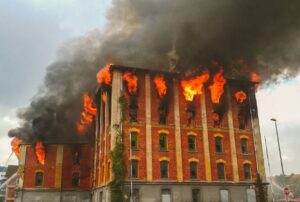
How Residents Can Protect Themselves
While systemic improvements to building codes, firefighting infrastructure, and construction quality are essential long-term solutions, individual residents cannot afford to wait for these changes to take effect. Personal preparedness is the most reliable immediate defense against high-rise fire risks in any city, regardless of how well-developed the local fire safety infrastructure may be.
The first step is understanding your building’s specific fire safety features and limitations. Know where the fire exits are located, whether the building has a functioning sprinkler system, and how to access the stairwells from your floor. If your building lacks certain safety features, this knowledge itself is valuable because it tells you how much you need to rely on personal preparedness measures. Our guide on the 60-second survival checklist for building fires provides a practical framework for rapid decision-making when every moment counts.
Beyond basic awareness, having a personal escape device can be the difference between being trapped and reaching safety. In buildings where stairwells may become impassable due to smoke or structural failure, and where fire department ladders cannot reach upper floors, a controlled descent device gives you an independent means of evacuation. The SkySaver personal rescue device is designed exactly for these scenarios, providing a safe, controlled descent from any floor of a high-rise building without requiring electricity, special training, or outside assistance.
Looking Forward: Building Safer Cities for the Future
The challenge of fire safety in the world’s fastest-growing cities is not insurmountable, but it requires coordinated action on multiple fronts. Governments must invest in updating building codes and ensuring consistent enforcement. Developers must prioritize fire-resistant construction materials and properly designed evacuation systems even when facing schedule and budget pressures. Fire services need expanded coverage, modern equipment, and ongoing training to keep pace with the vertical expansion of the cities they serve.
International cooperation and knowledge sharing also play a vital role. When one city learns from a devastating fire and implements new safety standards, those lessons should be rapidly communicated to other cities facing similar growth patterns. Organizations working in fire safety, urban planning, and emergency management have a responsibility to ensure that the mistakes of the past are not repeated in the cities of the future.
For the millions of people who already call these rapidly growing cities home, the message is clear: do not assume that your building’s fire safety systems are adequate, and do not rely solely on emergency services that may be stretched thin. Take personal responsibility for your safety by educating yourself, preparing an evacuation plan, and equipping yourself with the tools you need to escape. In a world where cities are growing faster than ever before, personal preparedness is not just advisable. It is essential.