When most people think about fire safety in their apartment, they think about smoke alarms. And while smoke detectors are undeniably essential, there is another invisible threat that claims hundreds of lives every year — one that smoke alarms cannot detect. Carbon monoxide in high-rise buildings is a silent, odorless, and potentially deadly hazard that every resident must understand and prepare for. A functioning CO detector is not a luxury. It is a life-saving necessity that deserves the same attention as every other component of your home safety plan.
Carbon monoxide is produced whenever fuel is burned incompletely. In high-rise buildings, common sources include gas stoves and ovens, gas-powered heating systems, fireplaces, generators run during power outages, and even vehicle exhaust from underground parking garages that can migrate through elevator shafts and ventilation systems into residential floors above. Unlike smoke, which is visible and acrid, carbon monoxide gives no warning. You cannot see it, smell it, or taste it — and by the time symptoms appear, the poisoning may already be severe.
How Carbon Monoxide Spreads Through High-Rise Buildings
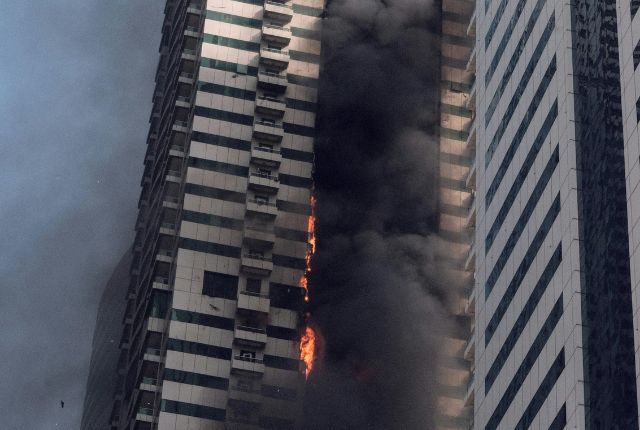
One of the most dangerous aspects of carbon monoxide in a multi-story building is how easily it can travel between units and floors. High-rise buildings are interconnected environments. Shared ventilation systems, gaps around plumbing and electrical penetrations, and the natural stack effect — where warm air rises through the building, pulling air from lower floors upward — all create pathways for carbon monoxide to spread far beyond the unit where it originates.
This means that a malfunctioning furnace in an apartment three floors below yours can produce carbon monoxide that infiltrates your living space while you sleep. A generator being run in an underground parking area during a power outage can send exhaust fumes through elevator shafts into residential corridors. These are not theoretical scenarios; they are documented causes of carbon monoxide incidents in high-rise buildings across North America and Europe. Understanding how hazards spread in tall buildings helps residents appreciate why the threat is not confined to the unit where the problem originates.
The Stack Effect and Seasonal Risk
The stack effect is particularly pronounced during cold weather, when heated indoor air rises rapidly through the building. This creates a pressure differential that draws air — and any contaminants it carries — from lower floors into upper floors. During winter months, when heating systems are running continuously and windows are typically closed, the risk of carbon monoxide accumulation is at its highest. Residents on upper floors may be exposed to CO generated many stories below without any indication that a problem exists.
Symptoms of Carbon Monoxide Poisoning and Why They Are So Dangerous
Carbon monoxide binds to hemoglobin in the blood far more effectively than oxygen, gradually starving the body’s organs and tissues of the oxygen they need to function. The early symptoms of CO poisoning — headache, dizziness, nausea, fatigue, and confusion — are easily mistaken for the flu, a migraine, or simple tiredness. This is what makes carbon monoxide so insidious: by the time a person realizes something is wrong, their cognitive function may already be impaired to the point where they cannot take effective action to save themselves.
Prolonged exposure to moderate levels of carbon monoxide can cause permanent neurological damage, cardiac complications, and death. In a sleeping household, the transition from mild symptoms to unconsciousness can occur without anyone waking up. Children, elderly residents, and individuals with pre-existing respiratory or cardiovascular conditions are particularly vulnerable and may be affected at lower concentrations than healthy adults.
Why Every High-Rise Apartment Needs a CO Detector
Given the invisible nature of the threat and the interconnected architecture of high-rise buildings, installing a carbon monoxide detector in every apartment is not optional — it is essential. Many jurisdictions now mandate CO detectors in residential units that contain fuel-burning appliances, but even units without gas appliances can be affected by carbon monoxide originating elsewhere in the building.
CO detectors should be installed on every level of your home, near sleeping areas, and at least fifteen feet from any fuel-burning appliance to avoid false alarms. They should be tested monthly and replaced according to the manufacturer’s recommended lifespan, which is typically five to seven years. Battery-operated models should have their batteries replaced at least annually, though models with sealed ten-year batteries are increasingly preferred for their reliability.
CO Detectors and Smoke Alarms Work Together
It is important to understand that smoke alarms and carbon monoxide detectors serve different functions and cannot substitute for each other. A smoke alarm detects particles of combustion in the air — it will alert you to a fire. A CO detector measures the concentration of carbon monoxide gas — it will alert you to a poisoning hazard that may or may not be accompanied by visible fire or smoke. Both devices are essential components of a comprehensive apartment safety strategy. Learning how to respond to emergency alerts ensures that when either device activates, you can act quickly and effectively.
Beyond Detection: Preparing for Complete Evacuation
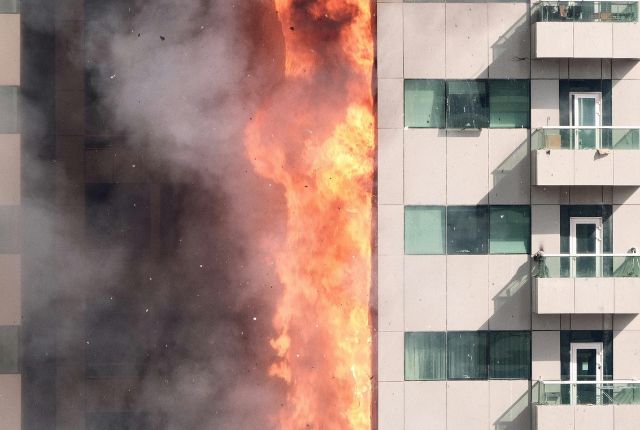
Detection is only the first step. When a CO alarm or smoke alarm activates, the next step is immediate evacuation. In a high-rise building, this means navigating stairwells, corridors, and potentially encountering conditions that compromise your ability to reach the ground safely. Whether the emergency is a carbon monoxide leak, a fire, or a combination of both, having a reliable evacuation plan — and the tools to execute it — is critical.
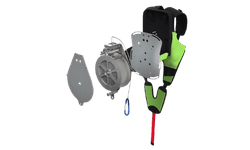
The SkySaver rescue backpack provides an alternative evacuation route when traditional exits are compromised. Designed for controlled descent from any window or balcony, SkySaver requires no training and can be operated by anyone — including children and elderly residents — in a matter of seconds. The three-step process of buckle up, clip to the anchor, and descend offers a reliable exit strategy regardless of what is happening in the corridors and stairwells.
SkySaver devices are certified by ASTM, ANSI, CE, TUV, and NFPA, and are insured by Lloyd’s of London. The SkySaver product range includes options for individuals, families, children, and pets — ensuring that every member of your household has a safe path to the ground when it matters most.
Carbon monoxide is a threat that demands respect precisely because it gives no warning. By installing and maintaining CO detectors, understanding how this gas moves through high-rise buildings, and equipping your home with reliable evacuation tools, you can close the gap between vulnerability and preparedness. Do not wait for an alarm to sound before you take action. Prepare today, and give your family the protection they deserve.