Fire safety is one of those subjects where popular belief and actual fact diverge in ways that can prove genuinely dangerous. Myths about fire behavior, smoke hazards, and evacuation timing are surprisingly common, and they are not harmless misunderstandings — they can lead people to make poor decisions in the most critical moments of their lives. Separating fire safety fact from fiction is not an academic exercise; it is a practical necessity for anyone who wants to protect themselves and their family in an emergency.
The five myths addressed here represent some of the most frequently encountered and potentially most harmful misconceptions about fire safety. Each one reflects a way of thinking about fire that feels intuitive but is contradicted by the realities of how fires actually behave. Understanding where the popular imagination gets fire wrong is the first step toward genuinely effective preparedness.

Myth 1: The Fire Itself Is What Kills People
This is perhaps the most dangerous misconception about fire fatalities. In most residential fire scenarios, the flames themselves are not the primary cause of death — smoke is. Smoke can fill an entire home within three to five minutes of a fire starting, and the gases it carries are acutely toxic. Carbon monoxide, hydrogen cyanide, and a range of other combustion byproducts are released when building materials, furniture, and synthetic fabrics burn. These gases incapacitate quickly, causing disorientation, loss of consciousness, and asphyxiation before the fire itself reaches many victims.
This reality has profound implications for how you should respond when a fire alarm sounds. Waiting to confirm that actual flames are present before evacuating is a dangerous error. By the time smoke becomes visible and alarming, the air may already be compromised. It also means that staying low — where smoke concentrations are lower — and moving quickly toward fresh air are not just advisory tips but potentially life-saving strategies grounded in the actual chemistry of fire.

Myth 2: Non-Residential Fires Cause More Deaths Than Home Fires
Many people assume that large commercial or industrial fires — the kind that make national news — account for most fire casualties. The data tells a very different story. According to FEMA, residential fires are responsible for 75.7% of all fire deaths, 79.1% of all fire injuries, and 52.2% of total fire-related property losses. The home is, statistically, the most dangerous fire environment most people will ever encounter.
This fact should reframe how households think about fire preparedness. The energy and investment that goes into safety planning should be directed primarily at the home. That means working smoke detectors in every bedroom and on every floor, a clearly understood and practiced evacuation plan, and — for residents of multi-story homes or high-rise buildings — a viable means of escape from upper floors when stairwells are blocked. The emergency action plan guide on the SkySaver blog offers a practical framework for families to develop and rehearse exactly this kind of preparedness.
Myth 3: You Have Plenty of Time to Escape Once a Fire Starts
The human tendency to underestimate fire speed is one of the most lethal misconceptions in fire safety. A small flame can transition to a large, room-engulfing fire in under a minute when flammable materials are nearby. Each subsequent minute can see the fire double in size. The thermal energy released drives temperatures upward with brutal speed, and under the right conditions — furniture, carpeting, synthetic materials — a room can reach the point of flashover in as little as three to four minutes from ignition.

A flashover occurs when the radiant heat in a room becomes so intense that every combustible surface ignites simultaneously. Survival inside a room that has reached flashover is essentially impossible. The practical implication is clear: when a fire alarm activates, the correct response is immediate evacuation, not investigation. Every second spent trying to assess the situation is a second not spent moving toward safety. The SkySaver blog post on how fast fire spreads provides additional context on fire growth rates that makes the urgency of rapid response viscerally clear.
Myth 4: The Smoke Alarm Will Warn You Well Before the Fire Is Serious
There is a common and understandable belief that smoke alarms function as an early warning system — alerting residents while a fire is still small and manageable, allowing time for a relaxed response. In reality, by the time a smoke alarm activates in most scenarios, conditions may already be deteriorating rapidly. Some advanced detector types are better at sensing fires in early stages, but standard ionization alarms respond primarily to fast-flaming fires, and photoelectric alarms are better at detecting slower, smoldering fires — no single technology covers all scenarios perfectly.

The critical point is this: when a smoke alarm sounds, the correct assumption is that danger is immediate, not that you have ample time to investigate, gather belongings, or alert others at a leisurely pace. Treat every alarm activation as a real emergency until confirmed otherwise. For guidance on selecting the most effective detectors, the SkySaver review of top smoke and fire detectors is a useful reference for understanding what different technologies offer and when each is most effective.
Myth 5: When One Sprinkler Activates, They All Go Off
This myth is almost entirely the product of Hollywood fire scenes, where all the sprinklers in a building erupt simultaneously in dramatic fashion. The reality is far more targeted and logical. Fire sprinkler systems are designed to respond individually — each sprinkler head activates independently when the temperature in its immediate vicinity reaches a threshold level. Sprinkler heads contain a heat-sensitive element (typically a glass bulb filled with liquid) that ruptures only when exposed to sufficient heat.
The result is that the sprinkler closest to the fire activates, delivering water directly to the area where it is needed. Studies have consistently shown that approximately 90% of fires are fully contained by the activation of a single sprinkler head. This is not a flaw in the system — it is precisely the design intent. Activating only the necessary sprinklers minimizes water damage to unaffected areas of the building while concentrating firefighting capacity where the fire actually is. Understanding this distinction matters because it affects how people interpret sprinkler activation — one head going off is a serious signal, not a glitch.
Turning Knowledge Into Preparedness
Correcting these myths is valuable, but knowledge only converts into safety through action. Reviewing and updating your household evacuation plan, testing smoke detectors monthly, and understanding the realistic timeline of fire development are all concrete steps that follow naturally from the facts above. For those who live or work in high-rise buildings, the challenge of evacuation is compounded by height — stairwells can fill with smoke, elevators become inoperable, and conventional escape routes may be completely inaccessible.
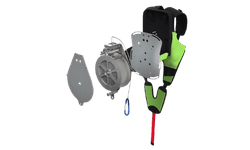
This is where the SkySaver rescue backpack addresses a gap that conventional fire safety advice rarely covers. Engineered for controlled self-rescue descent from high-rise windows, SkySaver provides residents and workers in elevated buildings with an independent evacuation option when every other exit is compromised. It requires no external installation and can be deployed quickly under stress — exactly the kind of solution that aligns with the reality of how quickly fires develop.
Do not assume when it comes to fire safety. The myths above represent real beliefs held by real people, and acting on them in an emergency can be catastrophic. Educate yourself, share what you know with your household, and invest in the tools that match the actual risks you face. Explore SkySaver’s range of high-rise escape solutions and ensure your preparedness strategy is built on fact, not fiction.